
West Ham 0-1 Arsenal: Disallowed stoppage-time equaliser sparks major VAR debate
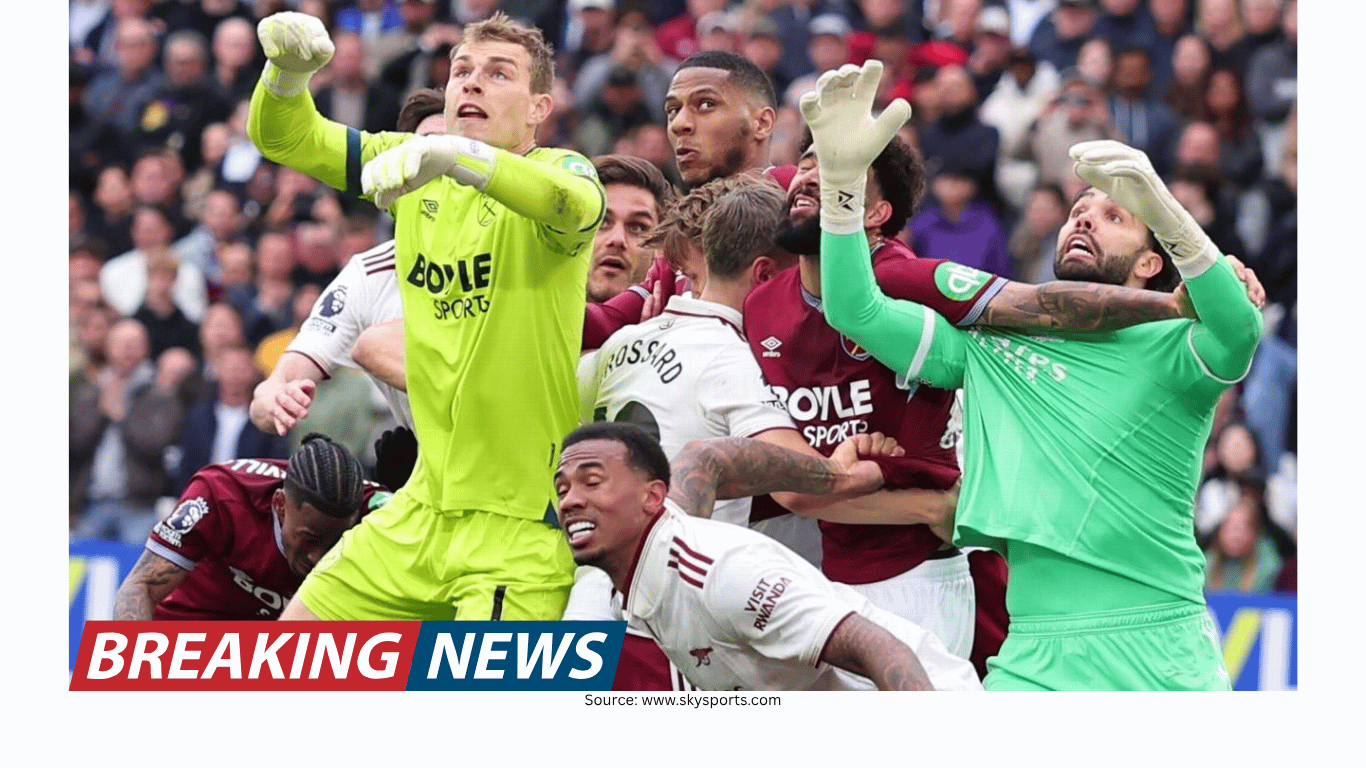
A dramatic finish at the London Stadium
Arsenal’s 1-0 win away at West Ham ended with one of the most scrutinised VAR interventions of the Premier League season, after a 95th-minute equaliser for the hosts was overturned following a lengthy review.
With Arsenal leading 1-0 deep into stoppage time, West Ham thought they had rescued a point when Callum Wilson struck late. The ball crossed the line despite Declan Rice’s attempt to keep it out, and referee Chris Kavanagh awarded the goal on the pitch.
What followed was a prolonged VAR check that ultimately changed the outcome of the match. VAR official Darren England recommended an on-field review, sending Kavanagh to the pitchside monitor. After 17 replays and a total of four minutes and 17 seconds of stoppage during the process, the referee reversed his original decision and ruled out the goal for a foul by Pablo on Arsenal goalkeeper David Raya.
Gary Neville: ‘The biggest moment in VAR history’
The decision provoked immediate and emphatic reaction from Gary Neville, who described the moment in unusually dramatic terms during commentary.
“This is an earthquake, a tremor of a moment,” Neville said, arguing the consequences could be enormous given Arsenal’s position in the title race. He went further by calling the disallowed equaliser “the biggest moment in VAR history” in the Premier League, framing it as a potentially season-defining intervention.
Neville’s assessment was rooted in the scale of what was at stake. Arsenal, described as title hopefuls, were attempting to win the league, while West Ham were fighting at the other end of the table. In Neville’s view, the decision was not merely a technical call but a pivotal point that could influence where the trophy ends up.
How the VAR process unfolded
The sequence began with the on-field award of the goal, which appeared to stand on the basis that the ball had crossed the line. However, the VAR review shifted attention to the challenge around the goalkeeper.
After the extended check, Kavanagh ruled there had been a foul by Pablo on Raya, and the goal was chalked off. The length of the review, the number of replays, and the need for the referee to consult the monitor all contributed to the sense of high tension inside the stadium.
Neville later expanded on the incident on his podcast, describing the uncertainty at the start of the review and the way the focus moved from whether the ball had crossed the line to whether Raya had been impeded. He also highlighted that Rice was “way behind the line” in the end, suggesting the ball had indeed crossed, but that the foul call became decisive.
Composure under pressure: Neville’s view of Darren England
While Neville’s headline description centred on the magnitude of the moment, he also praised the way VAR official Darren England handled it. He suggested the pressure was intense given the stakes and the scrutiny that comes with such decisions.
Neville said he wondered whether England would have “the courage” and “the nerve” to recommend overturning the on-field decision. He concluded that England “made the right decision,” and described the VAR official as composed while “walking through it,” communicating with the referee and a colleague seated next to him.
One notable element of Neville’s comments was his point about access: he said viewers had the “luxury” of hearing the process, and that he wished fans at home and in the stadium could hear the same exchanges. In his view, the communication and methodical nature of the check reflected well on the officials.
Neville also referenced other elements around the incident, including what he described as “a little foul by Rice behind,” while maintaining that the key issue was Pablo’s prolonged arm across Raya. He argued that if it had been a more natural movement, it might have been overlooked, but the sustained contact meant the officials “have to then call it.”
Pundit reaction: Keane, Redknapp and Wright back the call
Several high-profile pundits supported the decision to disallow the goal, focusing on the specific nature of the contact on the goalkeeper.
Roy Keane emphasised the predictability of VAR scrutiny in such moments. He argued players must assume “VAR are going to check everything” and warned against making contact with a goalkeeper, particularly leaving a hand on for “three or four seconds.” While acknowledging there was “all sorts going on,” Keane said that because the goalkeeper had a significant role in the incident, it should be considered a foul. He described West Ham’s actions as “really silly,” suggesting the contact was too obvious to escape review.
Jamie Redknapp also agreed, calling it “a brave VAR call” but adding that it was “the right one.”
Former Arsenal and West Ham striker Ian Wright was similarly clear, stating it was “without doubt” the correct decision. Wright said he believed Raya would have caught the ball “simply if he’s not impeded,” pointing to pulling and an arm coming across as evidence of interference.
What it meant for Arsenal in the title race
The immediate impact was straightforward: Arsenal held on to win 1-0 rather than drawing 1-1. But the broader implications were framed as potentially decisive in the title run-in.
According to the match context, Arsenal’s fate remained in their hands after the win, leaving them two wins away from clinching the title. Neville’s comments reflected the idea that this disallowed equaliser could be remembered as a moment that preserved a crucial victory.
Arsenal manager Mikel Arteta described the day as “a rollercoaster of emotions,” acknowledging the difficulty of the contest and the competing pressures on both sides. He said Arsenal expected a tough match because West Ham were “fighting for their lives,” while Arsenal were “trying to win the Premier League.”
Arteta was notably supportive of the officials. He said that when he has needed to be critical, he has been, but on this occasion he congratulated the referees. He argued it takes “a lot of courage and bravery” to send the referee to review the action and then make a decision in such circumstances. In his view, “when you see the picture, there is no question that it is a clear foul.”
West Ham’s frustration and the debate over consistency
For West Ham, the disallowed goal compounded the disappointment of defeat, particularly given how late the equaliser appeared to arrive. Manager Nuno Espirito Santo said the manner of the finish left the group “upset,” and he pointed to uncertainty around how similar incidents have been judged.
Nuno referenced “circumstances in the past that have been judged different,” without wanting to “go further than that.” He added that in recent seasons, similar situations have occurred and that “even the referees don’t know what is a foul and what is not a foul,” arguing it “creates doubt.”
Despite the frustration, Nuno also urged a wider view of the match, saying West Ham “made a very good match,” acknowledging Arsenal are “a tough team,” and concluding simply: “We lost the game.”
Jarrod Bowen: ‘Where is the line and where is the bar?’
West Ham captain Jarrod Bowen focused his post-match comments on what he sees as an imbalance in how goalkeepers are treated compared with outfield players.
Bowen said goalkeepers are “protected more than outfield players” and argued that there is “a lot of holding inside the box.” He questioned whether officials would be prepared to apply the same level of scrutiny consistently, asking if those incidents would be reviewed “every time” and punished with penalties.
He drew a distinction between unacceptable contact and the reality of physical play, saying: “You can’t wipe a goalkeeper out but the keeper has come in to grab the ball and has to expect contact. It’s the Premier League; there is going to be contact.”
Bowen also expressed a broader concern about the nature of extended reviews, suggesting: “If you look at something long enough, you will find something to give.” He concluded with a call for clarity and consistency: “If you’re going to give it, give it every week. Where is the line and where is the bar?”
Relegation implications and the wider table picture
While the spotlight naturally fell on Arsenal’s title pursuit, the result was also presented as significant at the bottom end of the Premier League table.
West Ham’s defeat was described as their 18th loss of the campaign. The consequences, as outlined in the match context, were severe: the result ensured the safety of both Nottingham Forest and Leeds. That left West Ham’s only hope of avoiding relegation resting on Tottenham dropping into the relegation zone in their place.
Tottenham were said to be one point ahead of West Ham and due to face Leeds on Monday Night Football, adding another layer of tension to the relegation battle.
Why this incident will keep being discussed
The controversy around the disallowed equaliser sits at the intersection of several ongoing debates: the threshold for fouls on goalkeepers, the consistency of officiating, and the impact of long VAR reviews on the flow and emotion of matches.
From one perspective, multiple pundits and Arsenal’s manager argued the decision was correct and even praised the bravery and composure required to reach it. From another, West Ham’s manager and captain questioned the consistency of similar calls and the broader standards being applied.
Neville’s description of the incident as the “biggest moment in VAR history” captured the sense that this was not just another review, but one that could echo through the final weeks of the season—affecting both the title race and the relegation fight.
Key points from West Ham 0-1 Arsenal
- West Ham scored a 95th-minute equaliser through Callum Wilson that was awarded on the pitch by referee Chris Kavanagh.
- After a lengthy VAR review led by Darren England, Kavanagh overturned the decision and disallowed the goal for a foul by Pablo on David Raya.
- Gary Neville called it the “biggest moment in VAR history,” highlighting the potential impact on Arsenal’s title push.
- Roy Keane, Jamie Redknapp and Ian Wright all agreed with the decision to rule out the goal.
- Mikel Arteta praised the officials’ “courage and bravery,” calling it a clear foul when viewed on the monitor.
- West Ham’s Nuno Espirito Santo and captain Jarrod Bowen criticised the lack of clarity and consistency in foul interpretations, particularly involving goalkeepers.
- The result left Arsenal two wins away from the title, while deepening West Ham’s relegation worries as described in the match context.