
Arsenal book a place in the Champions League final as belief returns at the Emirates
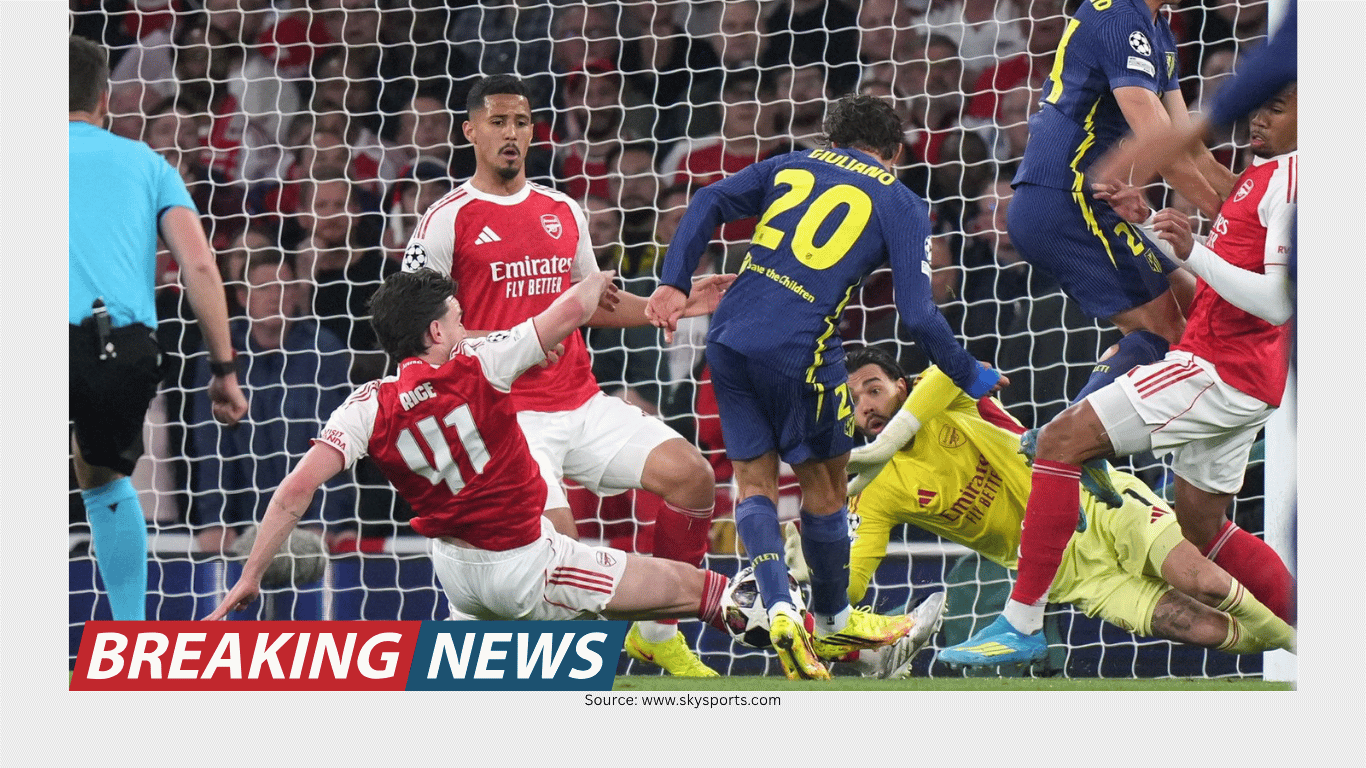
A night that felt different at the Emirates
The final whistle brought a release that had been building for weeks. Inside the Emirates Stadium, the noise rose quickly into celebration as Arsenal confirmed their place in the Champions League final. Mikel Arteta ran onto the pitch and collided with his players, who were jumping together in a tight huddle. Afterwards, the manager tried to capture the scale of what had just happened. “I’ve never felt that in a stadium before,” he said.
For Arsenal supporters, the reaction was about more than a single result. It was about a sense that the club had moved into a new phase. Arsenal have now reached their second ever Champions League final, a landmark moment that, for many, has been a long time coming. The scenes in the stadium reflected that: an outpouring of emotion, relief and belief, in a place that had recently carried a different kind of tension.
Only a few weeks earlier, the mood around big occasions had been coloured by nervousness. That anxiety had threatened to destabilise the season, particularly when pressure moments arrived. On this semi-final night, the atmosphere was transformed. The Emirates was not waiting for something to go wrong; it was actively pushing the team forward through every phase of the contest.
“Over Land and Sea”: the message behind the display
As the teams emerged from the tunnel, they were greeted by a large tifo showing a fleet of boats alongside the words “Over Land and Sea”. The display was not simply decoration. It was tied to Arteta’s own language earlier in the season, when he spoke in January about the need to ignore nerves and “jump on the fun boat” after a defeat to Manchester United.
At that time, the manager was asking for a change in energy. The Emirates, he felt, had become stressed when asked to carry the weight of big moments. The metaphor was a call to embrace the season rather than fear it, to ride the waves rather than be overwhelmed by them. Against Atletico Madrid, that shift was visible in real time. The crowd did not withdraw during difficult passages; it leaned in.
Instead of groans at imperfect spells, there was encouragement. Every tackle, header and throw-in won was cheered with the intensity usually reserved for goals. Even when Arsenal were not entirely convincing, the reaction was supportive rather than anxious. For a team navigating the fine margins of a Champions League semi-final, that kind of backing can shape the rhythm of a match.
A pivotal 24 hours: league initiative and a European final
The semi-final triumph came at the end of what Arteta described as a significant day for the club. Arsenal’s Champions League breakthrough arrived just after Manchester City dropped points in the Premier League title race, handing initiative to the Gunners. In the space of 24 hours, Arsenal were presented with a clearer path domestically and a historic opportunity in Europe.
Arteta acknowledged that the mood had changed. “Everybody can feel a shift in energy and a belief in everything,” he said when discussing the previous day’s events, including City’s draw at Everton. His message was measured rather than triumphant: “Let’s use it in the right way.”
That caution matters because momentum can be fragile. But the combination of results and performances has created a sense that Arsenal are moving in the right direction at precisely the right time. With the Premier League run-in continuing and a Champions League final in Budapest scheduled for May 30, the weeks ahead carry the possibility of an extraordinary finish to the season.
Injuries easing and options returning at the right time
Part of the renewed optimism around Arsenal is linked to personnel. As the season reaches its decisive stage, key players are returning and contributing. Bukayo Saka is the most obvious example, registering two goals and an assist in just over 100 minutes of action across the last few days. Those numbers are significant not only for what they add on the pitch, but for what they represent: a player finding rhythm again as the stakes rise.
In other areas, Arsenal have been able to inject fresh qualities. Riccardo Calafiori has added steel to the defence while also offering creativity going forward. Myles Lewis-Skelly has brought energy to a midfield that had recently looked short of fuel. Martin Odegaard’s return is another factor, and Kai Havertz is still to come back properly after missing some recent matches.
The effect is cumulative. Arsenal are stronger in numbers and, crucially, in confidence. The squad looks more capable of absorbing the demands of two competitions at once, and more equipped to manage the physical and mental load of high-pressure matches.
Arteta’s “beasts” message and a performance built on work
Before the semi-final, Arteta called for his team to be “beasts” against Atletico Madrid. The phrase was not about spectacle; it was about intensity, resilience and the willingness to do the hard parts of the job. In the second leg, that mentality showed itself in multiple moments that did not necessarily make the highlight reel but helped decide the tie.
Declan Rice produced a goal-saving challenge in the first half. In the second, Gabriel delivered two interventions to deny Atletico efforts from close range. These were the kinds of actions that can define knockout football, especially when the margins are thin and a single lapse can swing an entire season.
Leandro Trossard’s contribution was another example of work over glamour. He made 10 ball recoveries, twice as many as the next best player on the pitch, while being tasked with tracking back to limit Atletico’s major threat, Antoine Griezmann. It was the kind of performance that rarely dominates post-match conversation, but it can be essential in controlling the balance of a semi-final.
Gyokeres and the crowd: pressure from the front
If Arsenal’s momentum and confidence could be summed up in one player on the night, it might be Viktor Gyokeres. The striker’s performance was defined by relentless pressing and repeated sprints that dragged Arsenal up the pitch. He hounded Atletico’s defenders from start to finish, turning defensive work into attacking territory and lifting the stadium’s energy with every chase.
One of those bursts helped create the winning goal for Saka, with a run down the right wing that echoed a goal he set up against Fulham on Saturday. The crowd responded to his commitment, even forgiving him for missing a second-half chance. Arteta praised the striker’s overall impact. “He was immense,” he said. “You could see the reaction of the crowd every time he was holding the ball. His work rate, what he gave the team, was just incredible.”
Wayne Rooney, reflecting on the display, highlighted the value of that kind of forward. “He’s not as flashy as other strikers in the world but he does all the dirty work,” Rooney said, adding that Gyokeres played a “massive role” in Arsenal winning the game. It was a reminder that in elite knockout ties, the details can matter as much as the moments of individual brilliance.
A team that looks more complete at the business end of the season
The semi-final also offered a broader impression: Arsenal currently do not look like a side with obvious holes. They do not look like a team defined by costly mistakes or fragile confidence. Nor did they appear to be struggling with the final task of getting over the line, an issue that has haunted teams in title races and deep European runs alike.
Arsenal may not carry the “glitz and glamour” associated with some of Europe’s most decorated squads, but there is a growing steeliness to their performances. That edge can be decisive when matches become tense and tactical, when the game is less about flowing moves and more about winning duels, second balls and moments in both boxes.
Defensively, the numbers underline the point. This was Arsenal’s 30th clean sheet of the season in all competitions. Across the Champions League campaign, they have conceded just seven goals in 14 European matches. In the semi-final second leg, the defence was “never really stretched,” a description that speaks to control as much as it does to last-ditch defending.
What comes next: league run-in and Budapest
Arsenal’s immediate focus turns back to the Premier League. Their momentum has been strengthened by Manchester City dropping points, and the title race remains in their hands. The challenge now is to keep the emotional high of a European semi-final from becoming a distraction, while also using the confidence it brings as fuel for the final stretch.
There is also the looming date of May 30, when Arsenal will play the Champions League final in Budapest. Arteta believes his team can make the season truly special. “We have the ability and the conviction to do that for sure,” he said. With the possibility of two trophies in just over three weeks, the stakes are obvious, but so is the opportunity.
Supporters’ reactions: belief, patience and a sense of progress
The response from supporters and observers captured a mix of excitement and perspective. Some reflected on previous disappointments as part of the journey, suggesting setbacks can sometimes sharpen focus. One fan commented that losing a domestic cup final to Manchester City “might be a blessing,” adding that the team now needs a “winner’s mentality” and the ability to take chances when they come.
Others emphasised the value of continuity. Another reaction highlighted that sticking with a coach and allowing a squad to develop is “paying dividends,” with a suggestion that other clubs could learn from the approach. The theme was not simply celebration, but recognition of a process that has built towards this moment.
Several individual performances were singled out in the aftermath. Gyokeres’ display was described as his best in an Arsenal shirt. Rice and Gabriel were praised for their impact, while Lewis-Skelly was noted for showing maturity. Even the goalkeeper’s contribution was acknowledged, with mention of strong punches from David Raya. Taken together, the comments reflected a collective effort: “All for one and everything left on the pitch.”
The bigger picture: energy, belief and the final steps
Arsenal’s season now sits at a crossroads where belief can become achievement. The key development, as Arteta framed it, is the “shift in energy.” That shift has been visible in the stadium, in the intensity of the team’s work, and in the sense that players returning from injury are arriving at the perfect time.
There is still work to do, and nothing has been won yet. But Arsenal have placed themselves in a powerful position: in control of their Premier League run-in and through to a Champions League final that will define the campaign. The Emirates, once tense, now feels alive again. The challenge is to carry that feeling forward—over land and sea, through the league’s final hurdles, and into a European final night in Budapest.
- Arsenal have reached their second ever Champions League final.
- Manchester City dropping points has handed Arsenal initiative in the Premier League title race.
- Arteta described a “shift in energy and belief” around the club and urged it to be used “in the right way.”
- Key contributors and returning players include Bukayo Saka, Riccardo Calafiori, Myles Lewis-Skelly, and Martin Odegaard, with Kai Havertz still working back after missed matches.
- Arsenal recorded their 30th clean sheet of the season and have conceded seven goals in 14 European matches.
- The Champions League final will be played in Budapest on May 30.