
Mohamed Salah set to leave Liverpool as a defining Premier League great
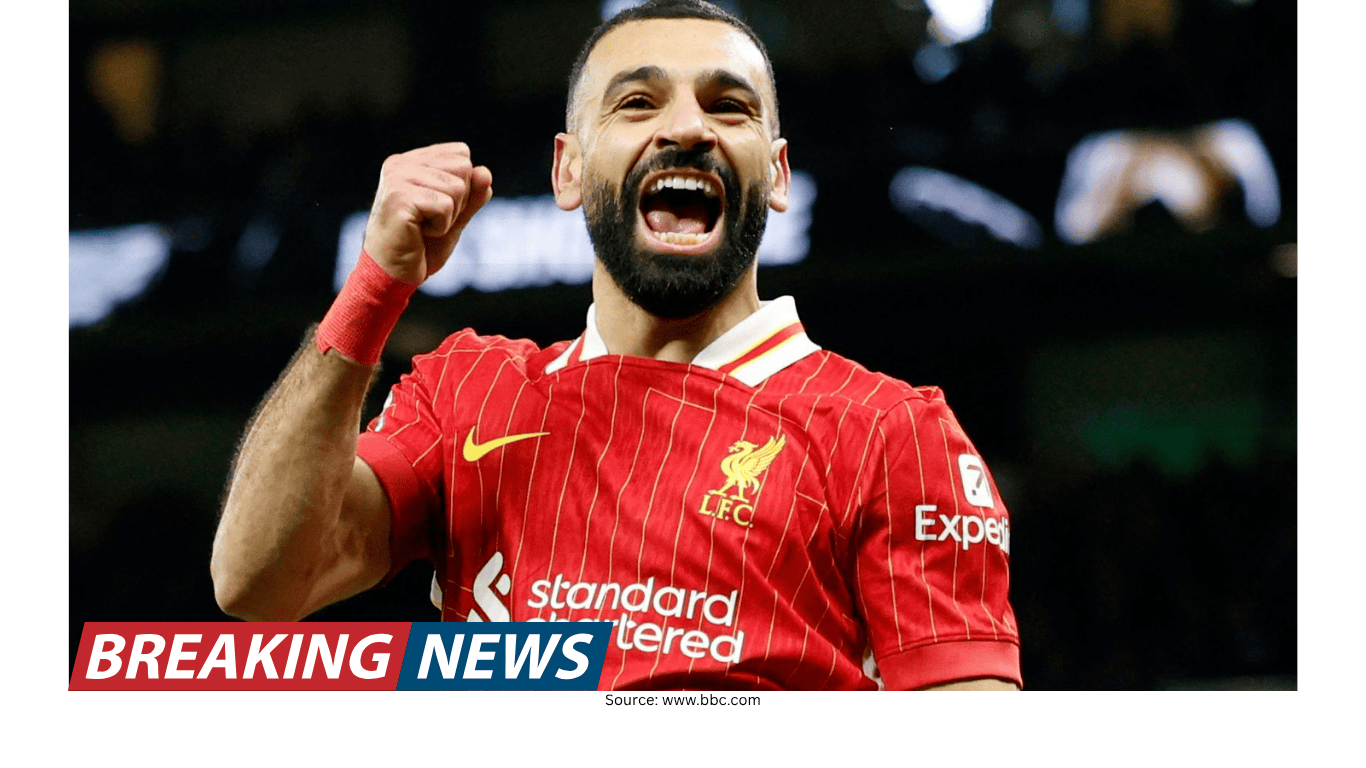
Mohamed Salah is expected to leave Liverpool this summer with a legacy that stretches beyond the obvious headline numbers. The goals, assists and silverware provide a neat summary of his impact, but they only partially explain why he will be remembered as an iconic figure at Anfield and a defining player of the Premier League era.
From the moment he arrived on Merseyside in June 2017, Salah became a central character in a period of sustained success. He was not simply a prolific forward in a strong team; he was repeatedly the decisive force, the player who could turn pressure into points, and the constant attacking reference point through change around him.
A transfer that reshaped Liverpool’s modern history
Salah joined Liverpool from AS Roma on 23 June 2017 for a fee of £34m. With the benefit of what followed, that price now reads like a bargain for a player who would go on to place himself among the club’s greatest scorers and one of the most productive attackers in Premier League history.
His journey to Liverpool was not straightforward. Earlier in his career he had been at Chelsea, but he did not make a major impact there, scoring two goals in 19 appearances, with only 10 starts. He had also previously chosen Chelsea over Liverpool when leaving Basel in January 2014, and his only memory of Anfield at that stage was starting in a 2-0 win there in April 2014. That match became a famous moment in the title race, remembered for Steven Gerrard’s slip and a result that pushed the championship towards Manchester City.
By the time Liverpool secured his signature in 2017, Salah had developed rapidly after leaving Chelsea, first on loan at Fiorentina and then during a standout spell at AS Roma. He arrived as a more complete player, even if the scale of what he would become at Liverpool was difficult to predict.
Early signs, then relentless output
Salah’s Liverpool scoring began with a goal that was far from glamorous: a scruffy, bundled effort from on the goalline in a 3-3 draw at Watford on the opening day of his first season. Yet it proved a fitting prelude to what came next. From that point, he became a constant source of goals, rarely going through long periods without delivering.
His production over the full span of his Liverpool career underlines that reliability. As he prepares to depart, he has scored 255 goals in 435 games for the club. That places him third on Liverpool’s all-time list of scorers, behind Ian Rush and Roger Hunt, a remarkable achievement in a club with a deep history of elite forwards.
Premier League numbers that stand alone
Salah’s league output is equally striking. In 310 Premier League appearances for Liverpool, he has scored 189 goals and provided 92 assists. Combined, that is 281 goal contributions, the largest total for a single club in Premier League history, five more than Wayne Rooney recorded for Manchester United.
The breakdown matters. Salah has often been described as ruthless, with the selfish streak common to elite goalscorers, but his assist total illustrates a broader influence. He was not simply finishing moves; he was also creating them, repeatedly contributing to the rhythm and productivity of Liverpool’s attack.
- Premier League for Liverpool: 310 appearances, 189 goals, 92 assists
- Total Liverpool record: 435 games, 255 goals
- Premier League single-club goal contributions record: 281
Big-game moments: heartbreak, then redemption
Salah’s first season set the tone for his Liverpool career. He scored 44 goals and contributed 14 assists in 52 appearances, a level of output that immediately placed him among the most dangerous attackers in Europe. Yet that campaign ended with personal and collective disappointment in the Champions League final against Real Madrid in Kiev.
In that final, Salah suffered a shoulder injury after a challenge by Real Madrid defender Sergio Ramos. He lasted only 31 minutes of the 3-1 defeat. The moment was painful not only because of the injury, but because it removed Liverpool’s most potent attacking threat on the biggest stage.
Redemption arrived quickly. Only a year later, Salah scored an early penalty in the Champions League final as Liverpool beat Tottenham 2-0 in Madrid. The contrast between those two finals became part of his Liverpool story: a player who experienced the extremes of elite competition and returned to deliver when it mattered most.
The trident that defined an era
At the height of Liverpool’s attacking power, Salah formed one part of a forward line that became one of world football’s most feared combinations. Alongside Sadio Mane and Roberto Firmino, he helped create an attack built on pressing, pace, power and constant threat.
The roles were clear and complementary. Salah attacked from the right, Mane patrolled the left, and Firmino operated as a striker who could also drop deep, connecting play and adding subtlety to Liverpool’s movement. The trio’s blend of attributes produced a devastating effect, and while personalities did not always align perfectly, the on-pitch understanding was repeatedly evident.
- Salah: threat from the right, direct and decisive in front of goal
- Mane: pace and penetration from the left
- Firmino: flexible forward play, linking attacks and creating space
Consistency, durability and a title after 30 years
Beyond individual brilliance, Salah’s Liverpool career has been marked by consistency and fitness. Even his lowest goals total in a full season before the current campaign would be considered outstanding by most standards: in 2019-20 he scored 23 as Liverpool won the league title for the first time in 30 years.
That season mattered not only for the numbers but for what it represented. Liverpool’s long wait for a league title ended, and Salah remained central to the team’s attacking identity. His contribution was part of a broader period in which Liverpool added major honours to their record, including the Champions League, two Premier League titles, the FA Cup, the EFL Cup, the Uefa Super Cup and the Fifa Club World Cup.
Win rates that reflect an era of success
Salah’s win rates provide another perspective on his time at the club. From his 310 Premier League appearances, Liverpool won 63.9% of matches. Across his full 435 games in all competitions, the win rate stands at 62.7%. Those figures reflect years in which Liverpool were not merely competitive, but frequently dominant.
Statistics can never capture the full emotional weight of a player’s influence, but they do help explain why Salah’s Liverpool era will be remembered as one of sustained excellence rather than isolated peaks.
Remaining the constant through change
As Liverpool’s squad evolved, Salah’s importance did not fade. When the era of key figures such as Mane and Firmino came to a close, along with other influential players including captain Jordan Henderson and Fabinho, Liverpool moved into what Jurgen Klopp described as “Liverpool 2.0”. The team changed shape and personnel, but Salah remained the match-winner.
There were moments of tension. Salah had fraught exchanges with Klopp at times and later with Klopp’s successor Arne Slot. One notable flashpoint came during a 2-2 draw at West Ham United in April 2024, when an angry touchline exchange occurred as West Ham scored while Salah was waiting to come on as a substitute.
Even so, the partnership between Salah and Klopp was highly productive. Klopp’s all-out attacking approach brought out the best in his main goalscorer, and Salah’s ability to decide games helped define Klopp’s Liverpool at its peak.
A standout season after Klopp’s departure
After Klopp left, Salah produced a season that ranked alongside his best. It was described as resembling a personal mission to bring the Premier League back to Anfield and to secure a 20th league title, a landmark that would draw Liverpool level with Manchester United’s total.
In that campaign, Salah was at the peak of his footballing and physical powers. He scored 34 goals in 50 starts in all competitions. Liverpool won the title with ease, and Salah played a significant role in ensuring the transition from Klopp’s animated style to Slot’s more measured, strategic approach was seamless in the Dutch coach’s first season.
A contract extension, then an unexpected downturn
In April 2025, Liverpool supporters celebrated when Salah signed a new two-year contract. At that point, the immediate future appeared stable, with the assumption that his influence would continue to anchor Liverpool’s attack.
It was therefore a surprise when his form fell away in the following season. This period coincided with tragedy at the club: team-mate Diogo Jota was killed in a car crash in July. Much of Liverpool’s grief remained private, and the full toll on the squad was unknown, but Salah’s emotions were visible at the start of the Premier League season.
In the opening league game against Bournemouth at Anfield, Salah used Jota’s trademark goal celebration after scoring Liverpool’s final goal in a 4-2 win. He was then moved to tears in front of the Kop as he applauded supporters following the final whistle while they sang Jota’s song.
Benchings, a public interview and a relationship under strain
As Salah’s form declined, he was dropped to the bench for three successive games in six days. That sequence led to a striking moment after he watched a 3-3 draw against Leeds United on 6 December. In a rare but usually carefully calculated interview, Salah said he had been “thrown under the bus” by Liverpool and revealed that his relationship with Slot had broken down.
Matters improved enough for him to return soon after. He made an early substitute appearance against Brighton at Anfield the following weekend, with Liverpool winning 2-0. Salah acknowledged the crowd by tapping his heart in front of the Kop, before departing for the Africa Cup of Nations with Egypt.
The public dispute and his criticism of the club brought the heaviest scrutiny of his Liverpool career. Even so, the broader view of his time at Anfield remained shaped by years of decisive contributions and historic achievements.
How he will be remembered
When Salah leaves, Liverpool will lose a player who combined elite output with longevity and a capacity to deliver in defining moments. He departs with a place high on the club’s all-time scoring list, with record Premier League goal contributions for a single club, and with a trophy haul that includes the biggest honours available.
His story also carries the arc that often defines the greatest careers: early setbacks, rapid development, sustained excellence, moments of heartbreak, and redemption on the grandest stages. He arrived as a high-quality forward and leaves as one of Liverpool’s greatest modern players and an enduring Premier League figure.
- Arrived: 23 June 2017 from AS Roma for £34m
- Liverpool goals: 255 in 435 games (third all-time at the club)
- Premier League contributions for Liverpool: 189 goals, 92 assists (281 total)
- Major honours at Liverpool include: Champions League, two Premier League titles, FA Cup, EFL Cup, Uefa Super Cup, Fifa Club World Cup
Whatever the immediate circumstances of his departure, Salah’s legacy at Liverpool is defined by what he delivered across multiple versions of the team: relentless scoring, significant creativity, and a standard of performance that helped shape an era. For Liverpool supporters and for the Premier League’s historical record, his impact is already secure.