
Senegal Parade AFCON Trophy in Paris as Legal Battle Over Title Continues
Senegal’s message in Paris: the trophy is still theirs
Senegal’s national team delivered a clear, public statement of intent by parading the Africa Cup of Nations trophy in front of a sold-out crowd at the Stade de France. The timing and the setting were unmistakable: this was not a routine celebration, but a deliberate show of unity after a recent decision that officially stripped Senegal of their continental crown.
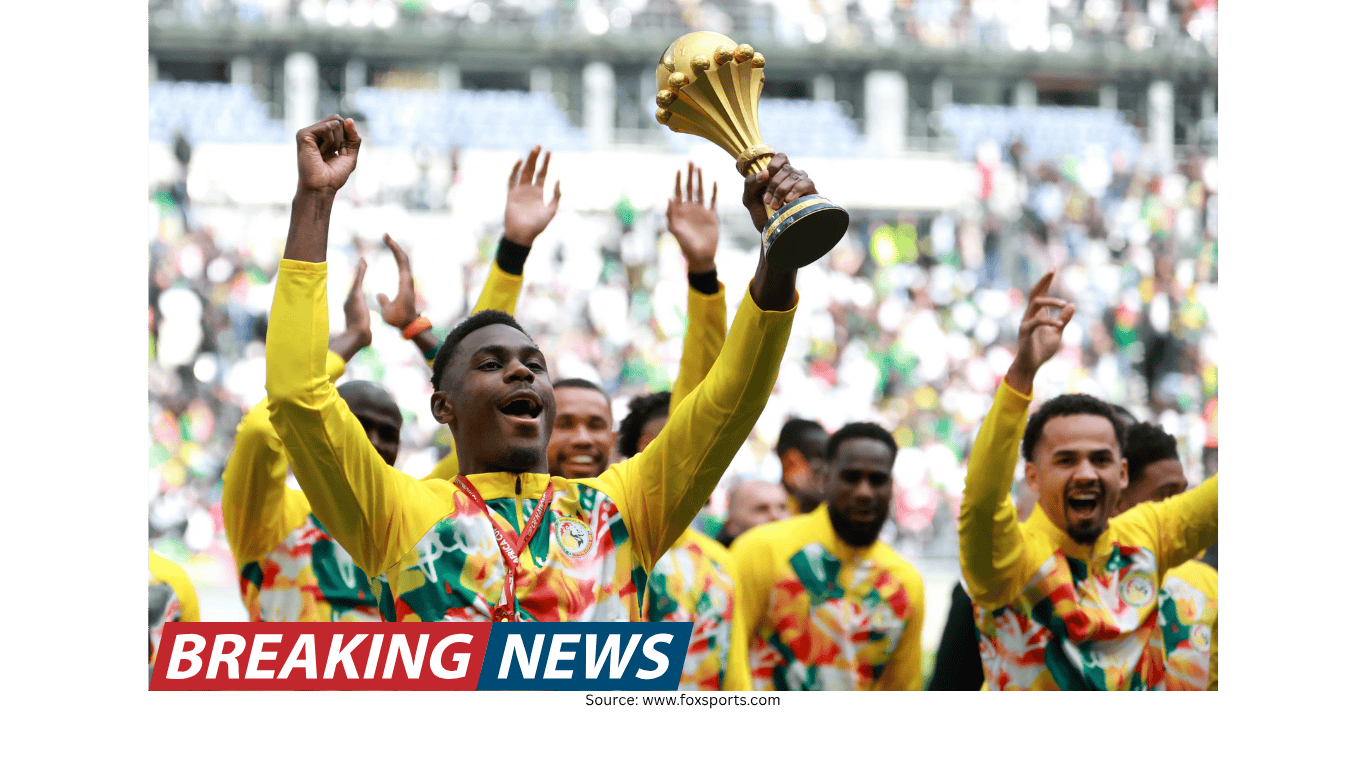
Before Saturday’s friendly match against Peru, players and staff presented the AFCON trophy to supporters, turning the pre-match moment into a symbolic rally. Captain Kalidou Koulibaly led the squad on a lap of honour, while goalkeeper Edouard Mendy held the silverware aloft to loud cheers. The team also posed for a formal group photo with the trophy, a gesture that reinforced their position that the title remains theirs, regardless of administrative rulings.
For Senegal, the spectacle in Paris served two purposes at once: it celebrated what the squad believes it earned on the pitch, and it signaled that the dispute is far from over.
A ruling that rewrote the outcome
The public celebration came just 10 days after the Confederation of African Football (CAF) issued a decision that sent shockwaves through African football. Senegal had initially been recorded as 1–0 winners in the final in January, but CAF has since revised the tournament record, declaring Senegal to have forfeited the match and awarding the title to Morocco.
In its justification, the CAF Appeal Board stated that it was acting under the competition’s regulations. The board’s decision was explicit about the consequence:
“The CAF Appeal Board decided today that in application of Article 84 of the Regulations of the CAF Africa Cup of Nations (AFCON), the Senegal National Team is declared to have forfeited the Final Match of the TotalEnergies CAF Africa Cup of Nations (AFCON) Morocco 2025 ("the Match"), with the result of the Match being recorded as 3–0 in favour of the Fédération Royale Marocaine de Football (FRMF).”
That ruling did more than change a scoreline. It changed the identity of the champion in the official record, shifting the title from Senegal to Morocco and placing Senegal’s recent triumph under a cloud of controversy.
What sparked the controversy in the final
At the heart of the dispute is a dramatic sequence of events during the final in Rabat. Senegal’s coaching staff, led by Pape Thiaw, ordered players to return to the dressing room in protest after a late refereeing decision.
The flashpoint came when the referee awarded Morocco a last-minute penalty following a VAR review for a foul on Brahim Diaz. Senegal’s players reacted with anger, and the protest escalated to the point where the team left the field.
The match did eventually resume, but only after a lengthy interruption. Sadio Mane played a key role in persuading his teammates to return to the pitch after a 17-minute delay. Even so, the incident became central to the regulators’ assessment of what happened and how the rules should be applied.
On the field, Senegal’s story had appeared to end in victory. Diaz missed the penalty, and Pape Gueye later scored an extra-time winner to seal a 1–0 result. Yet the administrative consequences that followed have proven more enduring than the goal itself, with CAF ultimately treating the protest as grounds for forfeiture.
Defiance made visible: the Stade de France lap of honour
Against that backdrop, Senegal’s decision to present the trophy publicly was loaded with meaning. It was an act designed for supporters as much as for officials: a reminder that the squad continues to identify as champions, and that the players are standing together while the case moves through the legal process.
The details of the Paris display underlined its seriousness. This was not a trophy briefly shown to cameras. It was carried, lifted, and showcased as part of an organized pre-match ceremony:
- Kalidou Koulibaly led the team in a lap of honour.
- Edouard Mendy held the trophy aloft as the crowd responded.
- The squad took a formal group photo with the silverware.
In other words, Senegal treated the trophy as a current symbol of achievement, not a disputed artifact. The scene conveyed a message of continuity: whatever the paperwork says today, the team’s internal narrative has not changed.
The federation’s response: appeal and strong language
Senegal’s challenge is not limited to symbolism. The Senegalese Football Federation (FSF) has appealed the CAF ruling to the Court of Arbitration for Sport (CAS), seeking to overturn the decision and reinstate Senegal as champions.
The FSF has described the decision in stark terms, branding it an “administrative robbery.” FSF President Abdoulaye Fall is leading the effort to reverse the ruling, a process that could take months given the nature of international sports arbitration.
While the appeal proceeds, Senegal has acted as though its original triumph still stands. The federation has already added a second star to the national team’s jerseys to mark the contested victory, a move that further signals its refusal to accept the revised official record.
What the dispute means for Senegal’s players
For the players, the controversy places their achievement in an unusual and uncomfortable space: celebrated by supporters, defended by the federation, but challenged by the governing body’s formal decision.
The Stade de France ceremony showed how the squad is choosing to respond—by leaning into unity and reaffirming what it believes happened on the pitch. From Koulibaly’s leadership in the lap of honour to Mendy’s role holding the trophy, the visual emphasis was on collective ownership of the moment.
At the same time, the dispute is not only emotional or symbolic. The CAF ruling has concrete implications: it records the final as a 3–0 forfeit in favour of Morocco, and it recognizes Morocco as champion in the official history. Senegal’s appeal to CAS is therefore not merely about pride; it is about changing the formal outcome and restoring the title in the record.
A match that continued, and a decision that followed
One of the striking elements of the case is that the final did not end at the moment of protest. After the 17-minute delay, Senegal returned to the field, the penalty was missed, and the match played on into extra time, where Pape Gueye scored the winner.
Yet regulators later concluded that the protest itself triggered disciplinary consequences severe enough to overturn the sporting result. CAF’s application of its rules, and the FSF’s insistence that the decision is unjust, have created a standoff that now moves from the pitch to the courtroom.
Senegal’s stance in Paris suggests the team is determined not to let the administrative dimension define the story on its own. By placing the trophy in front of fans, the squad emphasized the version of events it wants remembered: that it won the match, and therefore sees itself as champion.
Why the legal process matters now
With the FSF appealing to CAS, the dispute enters a phase that is likely to be slower and less visible than the scenes at the Stade de France. Arbitration can take months, and during that period the football world must live with two competing realities: CAF’s official record on one side, and Senegal’s continued public claim on the other.
The federation’s decision to add a second star to the jersey illustrates how Senegal is managing that gap. It is a way of institutionalizing its position while waiting for the appeal to be heard. The trophy parade in Paris complements that approach by making the claim tangible for supporters.
What comes next
In the immediate term, Senegal’s players have returned to international action, but the shadow of the ruling remains. The friendly against Peru became the stage for a broader statement, and the sold-out crowd at the Stade de France provided the backdrop Senegal needed to show that its supporters are still part of the story.
The next decisive developments will come through the appeal process. Senegal, through the FSF and President Abdoulaye Fall, is seeking a reversal of CAF’s decision at CAS. Until then, Senegal appears committed to a dual strategy: pursue the legal route while publicly maintaining that the team remains the rightful champion of Africa.
For now, the images from Paris—Koulibaly leading the lap, Mendy lifting the trophy, the group photo—stand as Senegal’s answer to a ruling it refuses to accept. The legal arguments will be made in court, but Senegal has already made its case to its fans.