
Final Four betting angles: UConn trends, player props, and a cautious approach to Michigan–Arizona
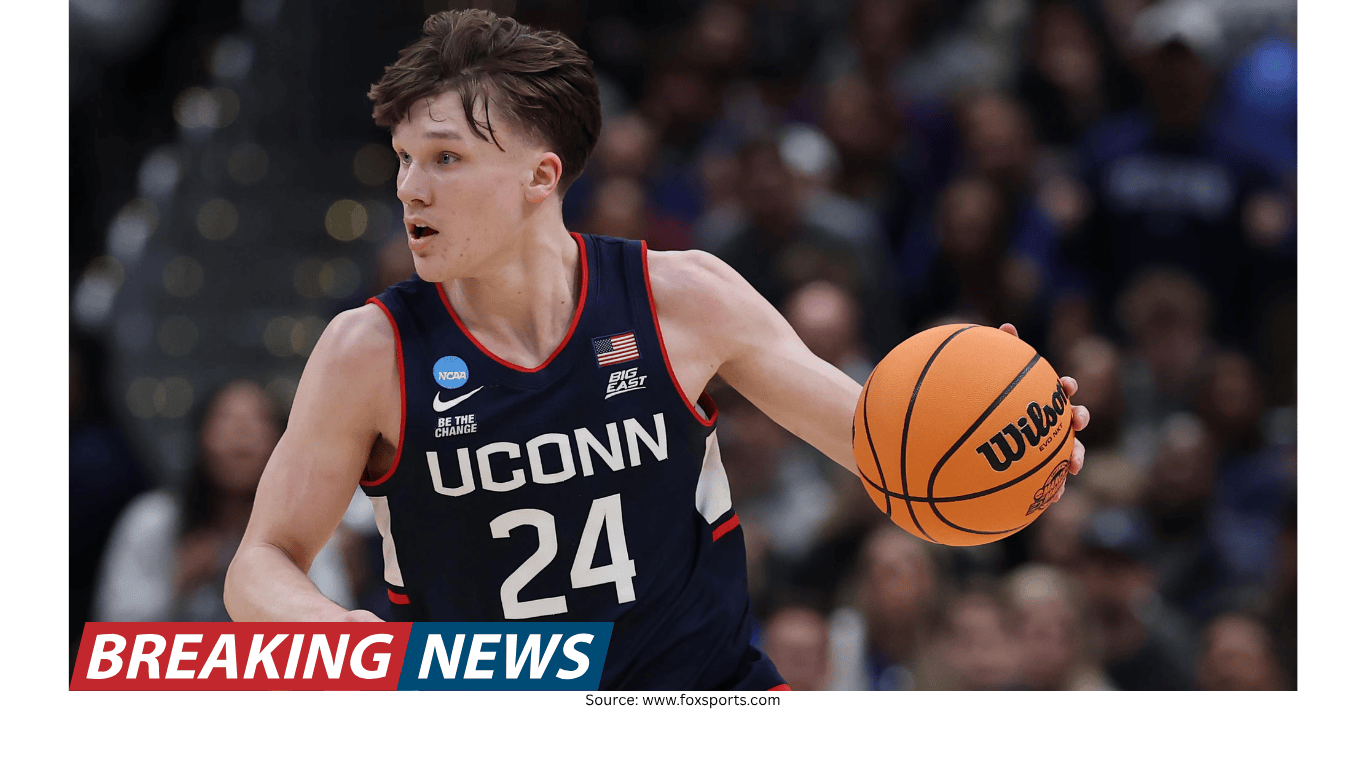
Final Four arrives with four familiar programs and two contrasting matchups
Arizona, Illinois, Michigan and UConn are the last four teams standing in this year’s NCAA men’s basketball tournament, and the Final Four tips off Saturday night at Lucas Oil Stadium in Indianapolis. With the field narrowed to four, the conversation naturally shifts from broad tournament narratives to matchup-specific edges: roster construction, defensive identity, late-game execution, and the way sportsbooks price both sides and player props.
From a betting perspective, the Final Four is also where emotion can become a costly variable. Fans often feel pulled toward the team they grew up with or the program they attended. That kind of loyalty can be part of what makes college basketball compelling, but it is also why separating rooting interest from wagering decisions matters more now than it did in earlier rounds.
Saturday’s slate offers two games with very different shapes. One matchup pits Illinois’ offense against UConn’s defense, while the other has been framed by many observers as the marquee game of the entire tournament: Michigan versus Arizona, two teams described as complete on both ends of the floor.
Why UConn’s recent tournament betting profile stands out
One of the clearest data points entering Saturday is UConn’s performance against the spread in recent tournament play. The Huskies are 17-1 ATS in their last 18 NCAA tournament games, a run that speaks to more than just winning; it suggests they have consistently exceeded market expectations in high-leverage settings.
That kind of trend does not guarantee a result on its own, but it does help explain why some bettors are comfortable backing UConn even when the matchup is difficult. In this case, UConn is catching points in a game it could realistically win outright. When a team with that recent tournament track record is priced as an underdog, it naturally draws attention.
The broader point is not that trends should override matchup analysis, but that tournament markets can lag behind a team’s proven ability to handle the unique pressures of March and early April. UConn, under Danny Hurley, has built a reputation as a steady, cash-making presence in this environment. For bettors trying to avoid overreacting to a single highlight or a short sample, that consistency can be a meaningful anchor.
Betting idea 1: Taking points with UConn, even if you’re rooting for Illinois
Illinois and UConn is the kind of game that invites strong opinions. Illinois supporters can point to roster quality and offensive firepower; UConn backers can counter with a defensive identity that has traveled well through multiple tournament runs. The tension for many bettors is that the game can be emotionally loaded, especially for anyone with a personal connection to Illinois.
Still, the betting case presented here leans toward UConn with the points. The logic is straightforward: UConn has been a strong tournament bet over an extended stretch, and being priced as an underdog provides a margin of error in a game that could go either way. It is also a reminder that rooting and betting do not have to be tied together. You can hope for one result and wager on another, especially when the numbers suggest value on the side you are not emotionally attached to.
Angle: UConn’s 17-1 ATS run in its last 18 tournament games
Market note: UConn is catching points in a game it could win
Mindset: Avoid “parlaying” fandom with wagers
Betting idea 2: Braylon Mullins under 12.5 points, with role and price doing the talking
Player props can be especially tricky in the Final Four because the public is watching the same highlights and reacting to the same signature moments. When a player hits a memorable shot, the next game’s point total can reflect not only the player’s true role in the offense, but also the market’s appetite to bet the “hot hand.”
That is the setup described for Braylon Mullins. After he swished one of the most memorable shots in NCAA history to beat Duke, the argument is that bettors are now paying a premium on his points prop. Sportsbooks are dealing his scoring line at over/under 12.5, with the under juiced to -130, a sign that the market is already leaning toward the under.
The core reasoning is about offensive hierarchy. Mullins is described as a sharpshooter with a bright future, but also as UConn’s fourth option. In a game as intense and possession-by-possession as a Final Four semifinal, being the fourth option matters. Shot volume is often dictated by role, matchups, and game flow, and a player can shoot well while still landing under a number if the attempts are not there.
Pick: Braylon Mullins under 12.5 points (-130)
Reasoning: Post-highlight premium plus a “fourth option” role
Betting idea 3: Andrej Stojakovic under 12.5 points, with perimeter defense in focus
The other prop angle centers on Andrej Stojakovic, identified as Peja Stojakovic’s son and described as a “bucket getter.” The caution is not about his ability to score, but about the specific defensive challenge in front of him. UConn is characterized as elite at defending the perimeter and particularly effective at harassing shooters.
That matters because perimeter scorers can swing between big nights and quiet ones depending on how clean their looks are. The description of Stojakovic’s range as “feast-or-famine” captures that volatility. The line is the same as Mullins’ at 12.5 points, but priced cheaper at -115, and the argument is simply that the number is a little too high given the matchup and the way UConn pressures shooters.
Importantly, the under case does not require Stojakovic to disappear. The assessment even allows for a scenario where he could score 20. The point is that the distribution of outcomes includes enough lower-end results—especially against a perimeter defense like UConn’s—that the under can be justified at the current number.
Pick: Andrej Stojakovic under 12.5 points (-115)
Reasoning: UConn’s perimeter defense and the player’s high-variance scoring profile
Michigan vs. Arizona: why many view it as the tournament’s marquee game
The second semifinal, Michigan versus Arizona, has been described as the unquestioned game of the tournament. Many pundits have labeled it the de facto championship game, and the rationale is easy to see based on how both teams are portrayed: complete, dominant on both sides of the ball, and built to win in multiple styles.
In contrast to the Illinois–UConn matchup—often framed as elite offense meeting top-tier defense—Michigan and Arizona are presented as extraordinary on both ends. That kind of balance tends to produce a game where small edges matter: a defensive stop that turns into transition points, a late clock possession that ends with a high-quality shot, or a single rebound that extends a critical trip.
Why the Michigan case is built on size, defense, shot making, and experience
The Michigan argument highlighted here is not based on one player or one hot streak. It is based on a checklist of traits that tend to translate in tournament settings: size, defense, shot making and experience. In other words, Michigan is viewed as having the “total package.”
There is also a broader framing: Michigan has been the best team from the nation’s best conference all season long. That statement is meant to reinforce that this is not a surprise run, but a team that has been operating at a high level for months.
Finally, the late-game trust factor is concentrated in one name: Yaxel Lendeborg. The claim is direct—there is no player in America trusted more with the game on the line. Whether bettors agree or not, this kind of confidence matters because Final Four games often come down to a handful of possessions. When a handicapper believes one team has the most reliable closer on the floor, it can tilt their evaluation in a near pick’em matchup.
A conservative stance on laying 1.5 points in college basketball
Even with a strong opinion on Michigan’s profile, there is a practical betting hesitation: laying 1.5 points in a college basketball game. The concern is not theoretical. In a sport where end-of-game fouling, late free throws, and last-second shots can turn a cover into a loss in a matter of seconds, small spreads can be uncomfortable.
That is why the approach described here emphasizes paying a slightly higher price for a more forgiving number, rather than accepting the risk that comes with laying a point and a half. The example given is vivid: the possibility of Arizona banking in a three at the buzzer to lose by one. In that scenario, a bettor laying 1.5 would lose despite being “right” about the winner, while a bettor who bought protection could still cash.
This is less about predicting a specific miracle shot and more about acknowledging how thin the margins are at this stage of the tournament. When the teams are evenly matched and the spread is tight, the method—how you choose to pay for safety—can be as important as the side itself.
Key principle: In tight tournament games, consider paying extra for a number that protects against a one-point finish
Context: Michigan–Arizona is viewed as a high-level, two-way matchup where late variance can decide both the game and the bet
Putting it together: three bets, one theme
The three betting ideas presented for Saturday share a common theme: respect the market, but don’t be led by emotion or highlights. UConn’s recent tournament ATS dominance provides a trend-based foundation for taking points, even if personal rooting interests point the other way. The two player-prop unders are rooted in role definition and matchup specifics—one shaped by the idea of an inflated post-moment price, the other by the challenge of scoring efficiently against a perimeter defense designed to take shooters out of rhythm.
And in the night’s other semifinal, the Michigan–Arizona game is treated as the tournament’s centerpiece, where the best approach may be less about bravado and more about acknowledging how frequently these games come down to a single possession. Whether you agree with every pick or not, the logic is consistent: in April, the smallest details—pricing, role, and late-game randomness—often matter most.