
Jalen Brunson powers Knicks’ stunning overtime comeback against Cavaliers in East finals opener
A comeback that flipped Game 1
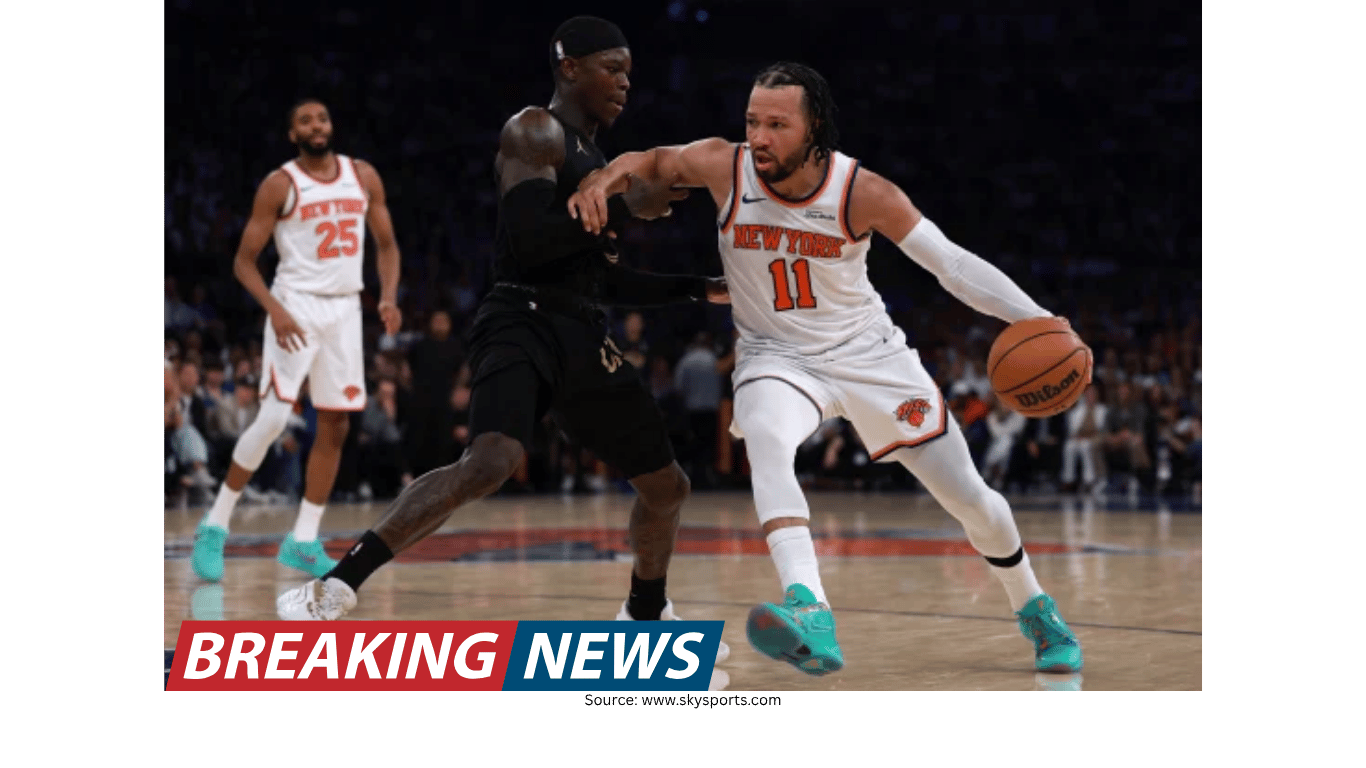
The New York Knicks opened the Eastern Conference finals with a result that felt improbable even by playoff standards, storming back from a 22-point deficit in the fourth quarter to beat the Cleveland Cavaliers in overtime. At Madison Square Garden, Jalen Brunson authored the turning point, driving New York from a 93-71 hole with under eight minutes remaining to a 101-101 tie late in regulation, before the Knicks took over in the extra period.
It was the kind of swing that changes not only a single night, but the emotional temperature of a series. Cleveland had controlled most of the game and appeared on course for another road win, only for New York’s pace, pressure and shot-making to overwhelm the final minutes. By the time overtime began, the crowd had already been pulled into a frenzy, and the Knicks played as if they could feel the finish line moving closer with every stop and every drive.
From 22 down to level: the decisive stretch
The defining numbers of the night came in a sequence that Cleveland will want to forget and New York will want to bottle. Trailing 93-71 in the fourth quarter, the Knicks mounted a comeback sparked by Brunson’s repeated attacks to the basket. New York closed regulation on an 18-1 run, a burst that erased nearly everything Cleveland had built over three quarters.
Brunson tied the game at 101-101 with 19 seconds left, completing the chase and setting the stage for overtime. The comeback was not framed as a single play or a single shot, but as a series of possessions in which New York steadily chipped away. Brunson’s own description captured the mindset behind it: “Just keep fighting. Keep chipping away. We’re not going to get it back in one possession.”
That approach mattered because the deficit was so large and the time so short. The Knicks did not need a miracle; they needed a sequence of stops, a sequence of scores, and a refusal to panic. Over the final minutes of regulation, that is exactly what they produced.
Overtime: New York takes control immediately
If regulation was about the chase, overtime was about the finish. The Knicks opened the extra period with a 9-0 run, instantly turning a dead-even game into one in which Cleveland was forced to scramble. The momentum that had been building during the fourth-quarter rally did not dissipate with the buzzer; it carried straight into overtime, where New York played with clarity and urgency.
The scene inside Madison Square Garden matched the moment. As New York seized control, the crowd responded with the kind of noise that tends to accompany postseason swings. The report from the arena described a delirious atmosphere, with fans dancing and screaming in the aisles as the Knicks’ run landed and Cleveland’s composure cracked.
Brunson’s 38 points and the supporting cast
Brunson finished with 38 points, the headline figure in a game that will be remembered for its final act. His impact was not limited to the box score; it was the timing of his drives and the steadiness he brought when New York needed a spark. Down big late, the Knicks did not simply trade baskets—they strung together stops and then used Brunson’s pressure to convert those stops into points.
New York also received meaningful contributions around him. Mikal Bridges scored 18 points. Three other Knicks scored 13 points, including OG Anunoby, whose night carried its own subplot. Anunoby returned after missing two games with a strained right hamstring and struggled for much of the contest, but he arrived when it mattered most. He scored nine of his 13 points in overtime, becoming a key factor in the period that decided the game.
Anunoby’s own explanation for the late surge was straightforward: “I was just going to play hard, be aggressive.” In a game of shifting momentum, that late aggression gave New York another edge, ensuring Cleveland could not sell out entirely on Brunson without paying a price.
Defensive flexibility and late-game adjustments
The Knicks’ comeback was powered by scoring, but it was enabled by defensive work that tightened as the clock shrank. Coach Mike Brown highlighted Anunoby’s impact on that end, pointing to the versatility he provided. “OG gave us a lot of versatility defensively and allowed us to do different things on that end of the floor,” Brown said.
That versatility matters most in playoff basketball, when teams hunt matchups and repeatedly test the same actions until a defense breaks. In the fourth quarter and overtime, New York’s ability to change looks and maintain pressure helped set the platform for the 18-1 run and the early overtime burst.
Cleveland’s strong start, then a fourth-quarter collapse
For three quarters, Cleveland looked like the team in control. Donovan Mitchell led the Cavaliers with 29 points, and the visitors seemed well on their way to what would have been a third straight road win. Evan Mobley posted 15 points and 14 rebounds, providing production and presence on the interior.
But the final quarter swung hard. Cavaliers coach Kenny Atkinson summed up the contrast between the early and late portions of the game: “We played great basketball tonight for three quarters. Unfortunately, the fourth quarter - they dominated us.” That domination showed up not only in the scoreline, but in the flow of the game—New York attacking with purpose, Cleveland struggling to steady itself as the lead evaporated.
Harden’s difficult shooting night and the matchup focus
James Harden scored 15 points for Cleveland, but his efficiency and ball security were issues. He finished one for eight on three-pointers and recorded more turnovers (six) than field goals (five). In a game decided by a handful of late possessions, those details became part of the story of how Cleveland lost control.
Mike Brown was candid about the strategic emphasis that emerged as the game tightened. “There is no secret: We were attacking Harden,” Brown said. He framed it as a response to the way Cleveland approached Brunson, explaining that both teams were willing to lean into a matchup-driven style. “Sometimes you’ve got to do what the game dictates, and they were trying to do the same thing with Jalen, so we said, ‘OK, we feel like we can play that game.’ We try not to play that game much, but we feel like we have a guy that we can play that game with in Jalen.”
In other words, when the game became about targeting and counter-targeting, New York trusted Brunson to win the critical exchanges. Over the final minutes and into overtime, that trust was rewarded.
Mitchell: accountability shared across the roster
After the loss, Mitchell addressed the challenge of containing Brunson and the temptation to pin the defeat on one player. He said the Cavaliers could have done more collectively to slow Brunson down and emphasized that the responsibility was shared. “Ultimately, this isn’t on him - it’s on all of us,” Mitchell said, referring to Harden. “It’s not just on one person. He’s been around the league long enough. He understands that.”
The sentiment reflected the reality of the fourth quarter, when New York’s run was not a single breakdown but a sequence of possessions in which Cleveland failed to halt the momentum. In the playoffs, those sequences can define a series if they are not corrected quickly.
What the result means for New York
The win extended the Knicks’ streak to eight straight games and moved them within three wins of their first NBA Finals appearance since 1999. That context adds weight to the comeback: it was not merely a dramatic Game 1, but a step toward a milestone the franchise has not reached in decades.
It also reinforced a pattern that playoff teams often rely on: the ability to win in more than one way. New York did not lead comfortably from start to finish. Instead, the Knicks showed they can absorb a difficult stretch, remain connected, and then execute under maximum pressure. In a conference finals setting, that resilience can be as valuable as any tactical advantage.
Key figures from Game 1
- Jalen Brunson: 38 points; tied the game late in regulation and drove the comeback.
- Mikal Bridges: 18 points for New York.
- OG Anunoby: 13 points in his return from a strained right hamstring; nine points came in overtime.
- Donovan Mitchell: 29 points for Cleveland.
- Evan Mobley: 15 points and 14 rebounds.
- James Harden: 15 points; 1-for-8 from three; six turnovers.
The lasting image: momentum, noise, and belief
Every postseason produces a handful of games that players and fans remember for years because of the emotional swing they deliver. This opener had that shape: a Cleveland lead that looked safe, a New York rally that gathered force, and an overtime period that began with a decisive run. The building’s reaction—described as delirious—was not just background color; it was part of the atmosphere that amplified each possession as the Knicks closed in.
In the end, the story of Game 1 was not simply that New York won, but how it won: by turning a 22-point fourth-quarter deficit into an overtime celebration, led by Brunson’s relentless pressure and supported by timely contributions, especially from Anunoby in the extra period. Cleveland, meanwhile, left with the frustration of having played “great basketball” for three quarters, only to see the final quarter slip away.
With the series now underway, both teams have clear takeaways. New York has proof of concept for its late-game belief and its ability to win matchup battles when the game becomes a test of nerve. Cleveland has evidence that its best stretches can put it in command, but also a reminder that closing time demands precision, composure and collective answers—especially when Brunson is driving downhill and the arena is roaring.