
Leicester City relegated to League One after 2-2 draw with Hull City
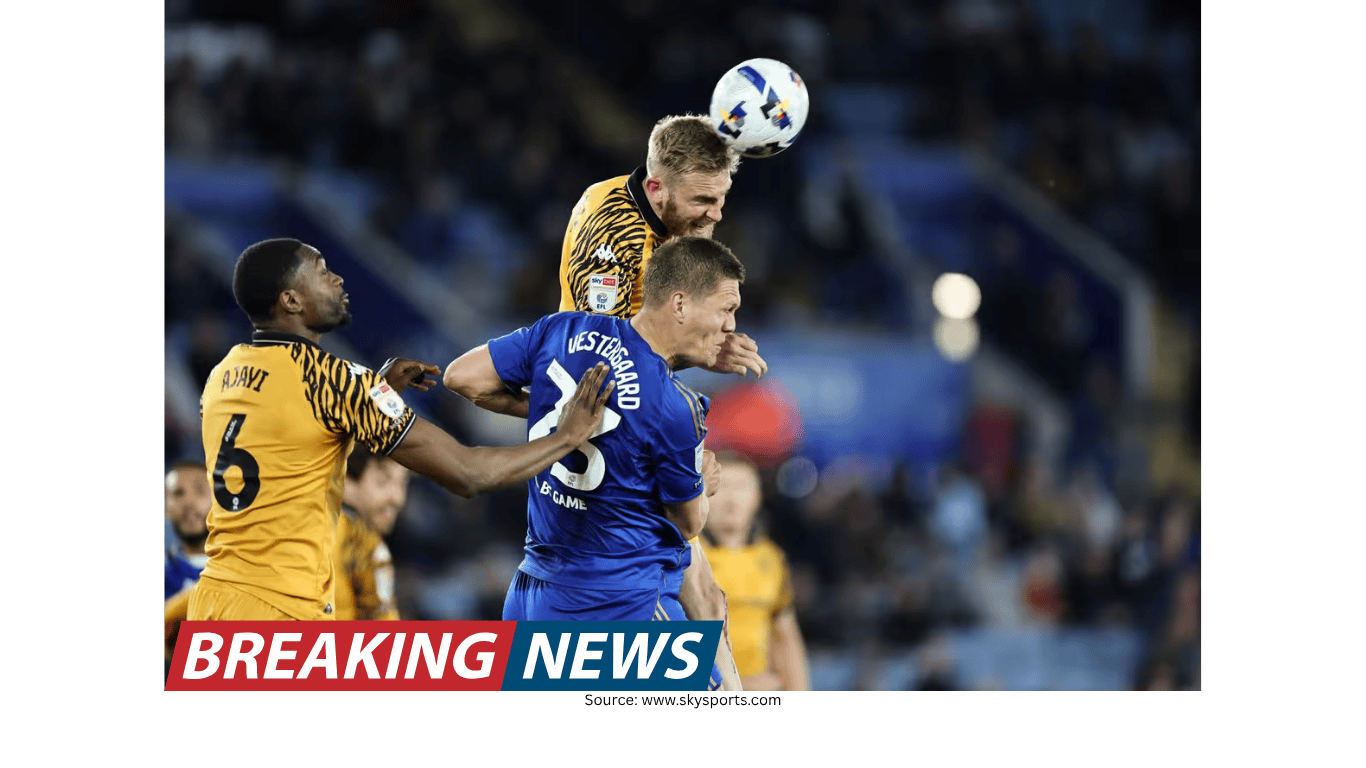
A draw that sealed Leicester City’s fate
Leicester City have been relegated from the Sky Bet Championship after drawing 2-2 with Hull City at the King Power Stadium on Tuesday night. The Foxes went into the match needing a win to keep their survival hopes alive, but the point they earned was not enough to change the bigger picture of a season-long struggle.
Before kick-off, Gary Rowett’s side were 23rd in the table and eight points from safety. Their predicament had been deepened by a run of just two wins in their last 19 league games, leaving them with virtually no margin for error. Leicester did show fight on the night, recovering from a first-half setback and briefly taking the lead after half-time, but Hull’s equaliser ensured relegation was confirmed.
The outcome marks a stark moment in the club’s modern history. Relegation to the third tier comes just shy of a decade after Leicester defied 5,000/1 odds to win the Premier League title under Claudio Ranieri. In 2026/27, the Foxes will play in the third tier of English football for only the second time in their 142-year history.
How the match unfolded: errors, response, and a decisive equaliser
The match was a snapshot of Leicester’s season: costly mistakes, flashes of quality, and an inability to sustain control. Leicester were described as “masters of their own downfall” for Hull’s opening goal in the 17th minute. Goalkeeper Asmir Begovic, attempting to play out from the back, passed straight to Millar. Millar took advantage, composed himself, and fired home to put the visitors ahead.
Leicester’s response was emphatic after the interval. The home side turned the game around in just 92 seconds early in the second half, giving supporters a brief sense that a late escape might still be possible.
52nd minute: Leicester were awarded a penalty when Issahaku Fatawu was tripped by Lewis Koumas. James converted emphatically from 12 yards to make it 1-1.
Shortly after: From the next attack, Thomas met Bobby De Cordova-Reid’s cross and made it 2-1.
For a short period, Leicester looked like a team capable of forcing the issue. But the momentum did not last. Hull levelled in the 64th minute, only nine minutes after Leicester had taken the lead. Millar again played a key role down the left, creating trouble before teeing up Oli McBurnie, who rifled home from 16 yards to make it 2-2.
The equaliser came amid heightened emotions. Hull manager Sergej Jakirovic was sent to the stands after protesting the penalty decision, a moment that underlined the tension of a match with significant consequences for both teams. When the final whistle arrived, Leicester’s relegation was confirmed.
Rowett: “You don’t get relegated over three or four games”
Leicester head coach Gary Rowett framed the result as both a single-match frustration and the inevitable conclusion of a longer decline. He pointed to the first-half error that gifted Hull a lead, calling it symptomatic of problems that have surfaced too often.
“It’s incredibly frustrating,” Rowett said. “If I look at the game first, it’s quite symptomatic in some ways. In the first half, we make a really poor mistake that gives them a lift. We’ve done that too many times. We didn’t match the urgency or importance of the game, although we still created a couple of good moments where we should score.”
Rowett also stressed the contrast between Leicester’s second-half performance and their broader run of results. “In the second half, we came out and were absolutely excellent,” he added. “Maybe if we’d played with that urgency in the last five or six games, we’d have taken more points. We looked like a team willing to fight and created lots of chances but couldn’t take them. I’m hugely frustrated with the game.”
However, Rowett was clear that relegation could not be pinned on a handful of moments. “The bigger picture is that you don’t get relegated over three or four games, but over a season,” he said. He highlighted a key defensive statistic that has undermined Leicester’s campaign: the team have kept only five clean sheets all season. In his view, the issues have not been limited to missed chances at the top of the pitch; poor goals conceded have been equally damaging.
Chairman’s apology: “There are no excuses”
Following relegation, Leicester owner and chairman Aiyawatt Shrivaddhanaprabha issued a statement to supporters, accepting responsibility for the club’s position and apologising for the disappointment caused.
“As chairman, that responsibility sits with me. There are no excuses,” he said. “We have experienced the highest highs and now the lowest lows, and the pain is shared by all of us.”
He continued: “I am truly sorry for the disappointment we have caused. I understand the strength of feeling among our supporters, and we do not take your support for granted, especially at moments like this.”
Looking ahead, Shrivaddhanaprabha said the club’s focus would shift to rebuilding. “Our focus now is on what comes next. We will take the necessary decisions to move the club forward, working together to rebuild, improve, and restore the standards expected of Leicester City. Our objective is clear - to respond strongly and compete to move this club forward again.”
He ended with a message of resolve: “We will face this head-on. We will keep going. Together.”
Reaction: disbelief, criticism, and concern beyond the pitch
The relegation prompted strong reactions, particularly because of the gap between expectations and reality. Andy Hinchcliffe described Leicester’s drop as difficult to reconcile with the squad’s perceived quality and experience.
“When you look back at previous relegated clubs, I can’t find another one with the quality and experience Leicester have,” he said. “This is a team that was tipped to win the Championship title. Falling to League One is unprecedented. A season no one saw coming.”
Hinchcliffe added that the players must reflect on what has happened. “Everyone on the playing side of things at Leicester needs to take a long, hard look at themselves because this is unacceptable,” he said.
Courtney Sweetman-Kirk focused on the human cost and the uncertainty that can follow relegation. “I cannot believe what I’ve seen this season,” she said. While acknowledging that the players care “to a degree,” she argued that the issue has been a lack of consistent intensity: “What I’ve seen consistently through the season is they don’t care enough. That’s a simple fact.”
She also highlighted concerns that extend beyond results, pointing to the potential impact on fans, auxiliary staff, and the broader structure of the club. She questioned what relegation might mean for the club’s training base and academy status, and warned that the consequences may not be confined to one match or even one season.
The financial picture: falling revenues and difficult decisions
Relegation to League One is expected to bring a significant hit to Leicester’s income. Revenues are predicted to fall by around 50 per cent compared with the Championship, and the club would be earning less than a third of what it received in the Premier League this time last year.
The scale of the drop is particularly striking given Leicester’s recent history. The club won the Premier League 10 years ago and lifted the FA Cup five years ago, yet it now faces a sharp contraction in revenue as it prepares for life in the third tier. Leicester enjoyed annual revenues of £187m in the top division. That figure is likely to be just over £100m by the end of this Championship season, and is predicted to fall to around £60m per year in League One.
Even with those reductions, Leicester are still expected to be the division’s biggest earners next season. Average revenues for a League One club are around £10m, roughly one-sixth of Leicester’s predicted figure, underscoring how unusual Leicester’s position will be in the third tier.
The club will have some financial cushioning through Premier League parachute payments, which are designed to soften the blow of relegation from the top flight in 2025. That entitlement would not change even after a second consecutive demotion. However, the payments reduce over time: clubs receive roughly 55 per cent of their Premier League entitlement in year one, 45 per cent in year two, and 20 per cent in year three. In Leicester’s case, the parachute payments for next season will be around £10m lower than the previous year.
There is also a longer-term implication. Even if Leicester were to return to the Championship at the first attempt, their parachute payments would drop further for the start of the 2027/28 season, tightening the financial environment again.
Squad rebuild and wage bill pressures
Leicester’s wage bill is expected to need a substantial reduction, with estimates suggesting it would have to fall by about 30-40 per cent. Some of that may happen automatically through relegation clauses in player contracts. Even so, the club is likely to face a major reshaping of the squad, with many players potentially unaffordable at League One level or unwilling to play in the third tier.
Concerns about the fit between the squad and the division were also raised in the immediate reaction. One view expressed was that, while Leicester may appear to have enough quality to compete strongly in League One, the challenge will be ensuring motivation and cohesion if players do not want to be there. In that context, it was suggested that whoever is in charge may prefer significant turnover to create a group committed to the task ahead.
Among the players discussed, Abdul Fatawu was identified as an obvious example of how relegation can affect a club’s transfer position. Leicester could have cashed in for around £35m when they were relegated from the Premier League last summer, with a number of top-tier clubs prepared to pay that fee at the time. Now, with Leicester in League One, his market value is expected to be lower, potentially by £10m-15m, although the club would still be expected to push for the best possible price.
What relegation means in historical terms
Beyond the immediate disappointment, the relegation has a historical weight. Leicester’s Premier League title win under Claudio Ranieri remains one of the most remarkable achievements in English football, and it has shaped perceptions of what the club can be. The contrast with the current reality is stark: a decade after being champions of England, Leicester are preparing for a season in League One.
It will be only the second time in the club’s 142-year history that it has played in the third tier, adding to the sense of shock around the outcome. The draw with Hull did not just end a match; it closed the door on survival and forced the club to confront a new competitive and financial landscape.
Key takeaways from Leicester 2-2 Hull
Leicester’s 2-2 draw with Hull City confirmed relegation from the Championship, with the club set to play in League One in 2026/27.
Leicester entered the match 23rd, eight points from safety, after winning only two of their last 19 league games.
A first-half error by Asmir Begovic gifted Hull the opener, before Leicester briefly turned the game around early in the second half.
Hull’s equaliser, finished by Oli McBurnie after Millar’s work down the left, sealed Leicester’s fate.
Chairman Aiyawatt Shrivaddhanaprabha apologised to supporters and said there were “no excuses,” pledging to rebuild.
Relegation is expected to cut revenues sharply, with predicted income falling to around £60m per year in League One.
The club faces pressure to reduce its wage bill by 30-40 per cent and may undergo significant squad changes.
A difficult reset begins
Leicester’s relegation was not defined by one moment, even if the error for Hull’s first goal felt emblematic. The match against Hull contained the urgency, fight, and quality that Leicester have too often struggled to sustain across the season, and it also contained the defensive vulnerability and costly lapses that have repeatedly undermined them.
Now the club faces a reset that will test its leadership and its ability to rebuild on and off the pitch. With revenues forecast to fall, parachute payments decreasing, and a squad likely to change significantly, Leicester’s next steps will shape whether this relegation becomes a brief detour or a more lasting period of instability. The chairman has promised necessary decisions and a commitment to restore standards; the challenge will be turning those words into a coherent plan for League One.