
PSG take control against Liverpool with 2-0 first-leg win at Parc des Princes
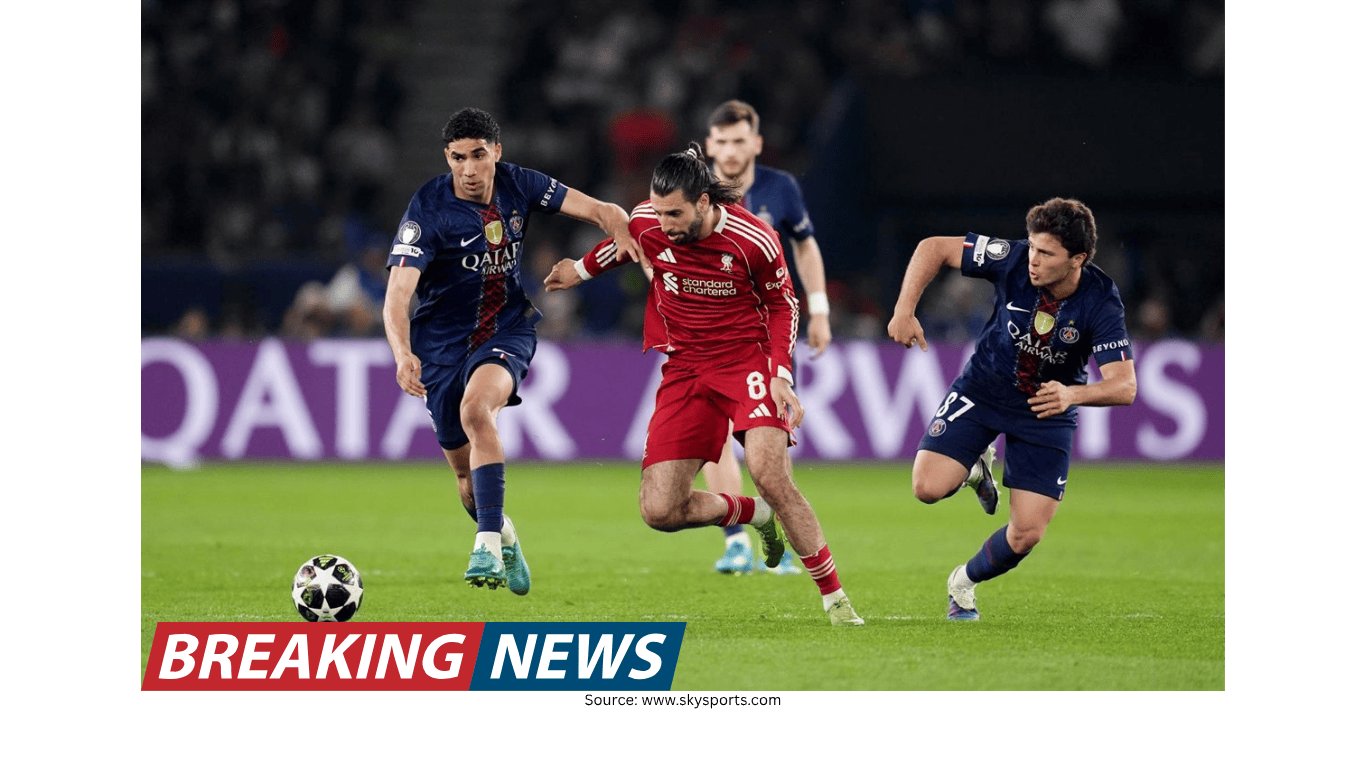
PSG seize the initiative in Paris
Paris Saint-Germain strengthened their grip on this UEFA Champions League quarter-final after beating Liverpool 2-0 in the first leg at the Parc des Princes. In front of an attendance of 47,511, the holders produced a one-sided performance that left Liverpool facing a significant challenge to reach the last four.
Desire Doue opened the scoring with a deflected strike, before Khvicha Kvaratskhelia punished defensive lapses to add a second with a composed finish. The result also extended Liverpool’s difficult run on the road: it was their fourth consecutive away defeat, their first such sequence since April 2012.
While a 2-0 scoreline keeps the tie alive, the flow of the match suggested Paris Saint-Germain could have won by a wider margin. Liverpool will need a markedly improved display in the second leg at Anfield to overturn the deficit.
How the goals arrived
The first goal came through Doue, whose effort took a deflection on its way in. Liverpool felt the moment was harsh in the sense that it did not stem from a clear, self-inflicted error, but PSG’s overall pressure had been building and the breakthrough reflected their control.
The second goal was more clearly linked to Liverpool’s defensive issues. Ryan Gravenberch failed to track Kvaratskhelia, and PSG took advantage. Kvaratskhelia latched onto a pass from Joao Gomes, cut inside with quality, and finished clinically to double the lead.
Those two moments were decisive, but they were not isolated incidents. PSG repeatedly found ways to play through or around Liverpool’s structure, creating chances that tested the visiting goalkeeper throughout the contest.
PSG’s dominance and Liverpool’s lack of threat
Liverpool were comprehensively outplayed and, crucially, struggled to carry an attacking threat. They mustered only three shots across the match and did not register a single effort on target. In a Champions League quarter-final first leg, that lack of output underlined how difficult the evening became for Arne Slot’s side.
Paris Saint-Germain, by contrast, played with tempo and authority. Their circulation of the ball and movement in advanced areas repeatedly pulled Liverpool out of shape, and the hosts created a stream of opportunities. The contest was lopsided enough that Liverpool’s main positive was that the deficit did not grow beyond two goals.
The result left Liverpool with work to do, but it also left PSG with a sense that their performance merited more. The home side’s finishing was described as wasteful, and they were denied at least one penalty decision that they felt should have gone their way.
Mamardashvili keeps Liverpool in the tie
If Liverpool can still realistically believe in a comeback at Anfield, a significant reason is the performance of Giorgi Mamardashvili. The Liverpool goalkeeper made a series of fine saves to prevent PSG from stretching their advantage further.
Mamardashvili denied Doue, Kvaratskhelia, Ousmane Dembele and Achraf Hakimi during periods when PSG were on top and pressing for more goals. With Liverpool offering little at the other end, those interventions mattered: they kept the tie within reach and ensured the second leg remains meaningful.
Even so, Liverpool’s reliance on their goalkeeper reflected the larger story of the night. PSG were the side creating, probing and dictating, while Liverpool spent long stretches reacting and defending.
Penalty controversy and VAR involvement
Paris Saint-Germain were also frustrated by key decisions in the penalty area. VAR overturned the referee’s initial decision to award a penalty against Ibrahima Konate for a foul on Warren Zaire-Emery. Later, PSG felt Konate should have been penalised again for a push on Nuno Mendes, but no spot-kick was given.
Those moments added an extra layer of tension to a match that PSG otherwise controlled. While the decisions did not alter the final score, they contributed to the sense that PSG had both the chances and the moments to have scored more than twice.
Slot’s tactical change: a back five and a surprise omission
Arne Slot altered Liverpool’s system for this first leg, setting his side up with a back five in an attempt to contain PSG’s attacking threat. The adjustment was a clear acknowledgement of the challenge posed by the holders at home.
The selection also brought a major talking point: Mohamed Salah was left out of the starting line-up and ultimately remained an unused substitute. That came only two weeks after Salah confirmed he will leave at the end of the campaign.
Despite the structural change, PSG were not fazed. They continued to move the ball quickly and found ways to play through Liverpool’s press or exploit space behind when Liverpool went man-for-man. When Liverpool sat deeper, they limited some openings, but PSG still found the decisive moments—one of them arriving when Liverpool were in a low block.
Isak returns, but Liverpool cannot respond
Slot attempted to shift the momentum by introducing the fit-again Alexander Isak, making his first appearance since December. The substitution was designed to spark a response and give Liverpool a focal point higher up the pitch.
However, Liverpool never looked close to getting back into the game. Even in the closing stages, PSG continued to cut them open, creating further chances and maintaining territorial control. Liverpool’s inability to build sustained attacks or test PSG’s goalkeeper meant the match drifted away from them.
What the result means for Liverpool’s season
The defeat was damaging not only because it came in a Champions League quarter-final, but also because of Liverpool’s broader context. With Liverpool already out of the domestic cup competitions and their hopes of retaining the Premier League title described as long over, this tie represents their remaining route to silverware.
That reality sharpened the impact of the performance in Paris. A 2-0 loss is not insurmountable, but the manner of the defeat—outclassed, outshot and without a shot on target—means the second leg requires a substantial improvement.
Key match figures and standout performers
Khvicha Kvaratskhelia was named Player of the Match after a performance that combined end product with constant threat. His goal, created by intelligent movement and finished with composure, encapsulated PSG’s attacking quality on the night.
PSG’s control was also reflected in strong individual displays across the pitch, including high ratings for Vitinha, Joao Neves, and Willian Pacho, while Liverpool’s best performer was Mamardashvili, whose saves prevented the scoreline from becoming more severe.
Selected ratings from the match included:
- PSG: Pacho 8, Vitinha 8, Joao Neves 8, Doue 8, Kvaratskhelia 8
- Liverpool: Mamardashvili 8, Frimpong 6, Kerkez 6, Szoboszlai 6, Wirtz 6
Those numbers broadly matched the pattern of the game: PSG’s midfield and attacking line dictated the tempo, while Liverpool had isolated bright moments but struggled collectively.
Arne Slot’s assessment: “We’re lucky to only lose 2-0”
After the match, Liverpool head coach Arne Slot acknowledged the scale of the challenge his side faced in Paris and the importance of keeping the tie alive. He pointed to PSG’s chance creation and the tempo with which they played, while also highlighting the potential impact of the return leg at Anfield.
Slot said: “We’re lucky to only lose 2-0 as they had more chances than they scored, although the first goal felt harsh as we didn’t give anything away.”
He added: “It’s very good we’re still in the tie. We can bring them to Anfield with how much a difference Anfield can make for us.”
Slot also described the difficulty Liverpool had in creating opportunities: “We wanted to create much more but there wasn’t a lot to create for us. They were having the ball with incredible tempo all over the place.”
On Liverpool’s approach, he explained the balance between pressing and protecting space: “We tried to press them high. Sometimes it was working but lots of times they were able to play through us.”
He continued: “When we went man-for-man they played the ball in behind us. When we were in a low block we hardly conceded although the goal was when we were in a low block.”
Slot also referenced a previous experience of a similar dynamic across two legs, suggesting he believes the home environment can transform the contest: “I stood here similar last season and although we won 1-0, the game was exactly the same. But the game at Anfield was completely different, so we’re happy we’re in the tie.”
What to watch for in the second leg at Anfield
The second leg now becomes a test of Liverpool’s ability to respond under pressure. They must find a way to generate meaningful chances after failing to record a shot on target in Paris, while also tightening up defensively against a PSG side that created enough openings to suggest they could score again.
From PSG’s perspective, the focus will be on translating dominance into efficiency. They had opportunities to put the tie beyond doubt in the first leg but did not take enough of them. With Liverpool likely to be more assertive at home, PSG will need the same composure and tempo, as well as sharper finishing, to protect their advantage.
For now, PSG take a two-goal lead from a performance that combined control, creativity and cutting edge at key moments. Liverpool, meanwhile, return home knowing that Anfield must provide both intensity and inspiration if they are to keep their Champions League campaign alive.