
Chelsea sack Liam Rosenior after four months as club begins another search for direction
Rosenior’s short reign ends amid a turbulent run
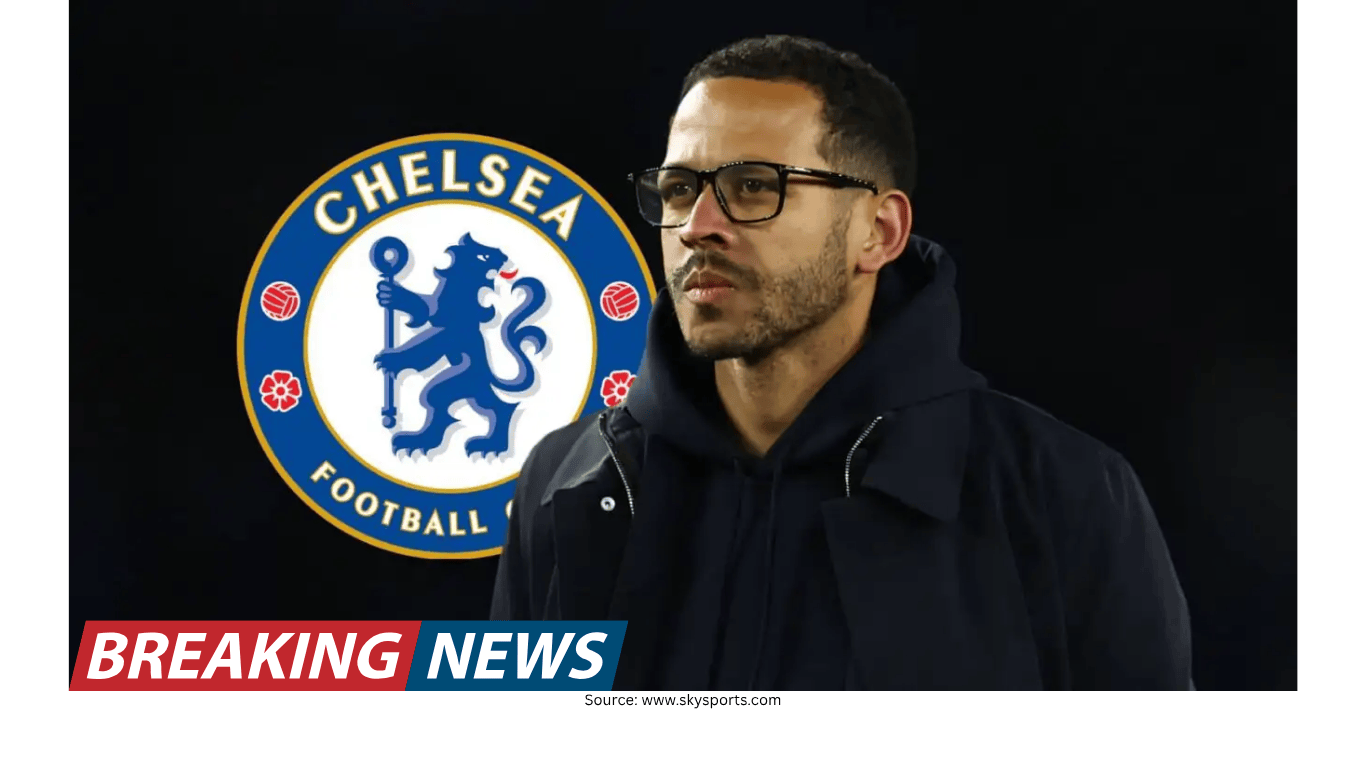
Chelsea have ended Liam Rosenior’s tenure after less than four months in charge, drawing a line under a spell that began with a six-year contract in January and finished with a damaging sequence of results. Rosenior departs after losing seven of the last eight games, a run that ultimately proved too severe to withstand, particularly as the club’s Champions League hopes faded.
Calum McFarlane has been appointed interim head coach until the end of the season. The decision signals that Chelsea are preparing for a wider recruitment process in the summer rather than rushing into another long-term appointment immediately.
A public vote of confidence that did not last
Rosenior’s dismissal came just six days after he received a public endorsement from co-owner Behdad Eghbali, described as the most powerful figure at Chelsea and the person who effectively runs the club. Eghbali made an unusual on-the-record intervention at a sports business conference in Los Angeles, saying: “I think we are behind Liam. We think he can be successful long term.”
Two defeats later, Rosenior was out of a job. Sources close to Chelsea insisted that Eghbali’s appearance in Los Angeles was not arranged as a pre-emptive response to fan unrest, including an anti-ownership demonstration planned ahead of the Manchester United match. The conference appearance, they said, had been arranged months earlier.
Attempts to change the narrative before results worsened
In the days leading up to the United match, Chelsea took steps that appeared designed to lift the mood around the club. On the Friday, the club announced Moises Caicedo had signed a new contract. In practical terms, the Ecuador international’s deal—previously set to expire in 2032—was extended by one year to 2033, alongside a pay rise. The move came during a season described as underwhelming for Caicedo.
That same day, an exclusive interview with Cole Palmer was published in which the forward indicated he wanted to stay at Chelsea, seemingly pushing back against reports that he wanted to move to Manchester United. Palmer also spoke positively about Rosenior, suggesting the coach needed a proper pre-season. Palmer’s comments were notable given his typically reserved media profile, though the overall tone still left room for interpretation about the strength of the public backing.
United defeat, then a decisive collapse at Brighton
Eghbali was not at Stamford Bridge for the Manchester United game, a match framed as crucial for Chelsea’s Champions League ambitions. The defeat was a significant blow, and the situation deteriorated further when late goals in other matches on Sunday—scored by Liverpool and Aston Villa—left Chelsea’s pursuit of a top-five finish described as “almost mission impossible.”
Despite that setback, Chelsea were still prepared to give Rosenior more time. However, the manner of the subsequent defeat at Brighton became the final turning point. Eghbali flew in for that game, and senior executives were present, including sporting directors Paul Winstanley and Laurence Stewart and recruitment director Joe Shields. By Tuesday night, the sense inside the club was that something had to change.
Signs the message was no longer landing
On the pitch and in the stands, the pressure intensified. The players were not seen as playing for Rosenior, while fans continued to direct displeasure towards the owners. For the first time, there were sustained chants calling for Rosenior to leave.
After the Brighton match, Rosenior appeared “shellshocked” and criticised his players in post-match interviews—an approach that often accelerates a manager’s decline. While it can be a cliché to say a coach has “lost the dressing room” when results are poor, the performance itself was cited as evidence that some players no longer believed in what Rosenior was asking them to do.
There were also indications of divided loyalties within the squad. Some players, including Marc Cucurella and Enzo Fernandez, were known to be closer to Enzo Maresca than to Rosenior. Maresca had left earlier in the season, and his departure remained a central reference point in the club’s narrative of instability.
How the decision was made
With the players given a day off on Wednesday, Chelsea’s sporting leadership group discussed the options: whether there was any route to stabilising Rosenior’s position or whether a change was unavoidable. The conclusion was that Rosenior had to go, with Eghbali described as the driving force behind the final call.
One of the practical challenges in any mid-season dismissal is succession planning. Chelsea concluded that an interim appointment was necessary for the remaining weeks, with a permanent head coach to be hired in the summer.
McFarlane returns as interim, and why it matters
McFarlane, 40, steps in on an interim basis after previously taking charge for two games when Maresca left at the start of the year: a draw at Manchester City and a defeat at Fulham. Chelsea’s choice to return to McFarlane reflects a preference for continuity within the current structure rather than a symbolic appointment designed to energise the fanbase.
Bringing in a former player was viewed as potentially more popular and potentially more galvanising, but that route was not taken. Notably, legendary former players such as John Terry were not considered.
No shortlist, no clear favourite: what Chelsea say comes next
Chelsea’s statement announcing Rosenior’s departure said the club would reflect before making a new appointment. Behind the scenes, the picture is even more open-ended: there is said to be no shortlist and no No 1 candidate at the moment.
That lack of a frontrunner may be read in two ways. It could indicate a deliberate attempt to avoid rushing into another long-term commitment after a short-lived six-year deal. It could also underline how complicated the job has become, with sporting strategy, squad planning, and club governance all part of the discussion.
Questions around the club’s structure
One of the biggest issues hovering over the next appointment is whether Chelsea’s current structure—including five sporting directors—will remain in place. While there is not expected to be “major surgery” at the football leadership group level in the summer, the club’s recent history suggests that change is rarely far away.
Any incoming head coach will need to understand, and accept, how power and decision-making are distributed at Stamford Bridge. That context is central to the club’s recent turbulence and to the challenge of building stability.
The profile of manager Chelsea may target
As Chelsea prepare for a summer search, they are expected to be linked with many names, with agents likely to make contact. The club’s intention, as described, is to avoid repeating past mistakes by targeting a manager with proven Premier League experience and/or a high-level record of success.
Several managers were cited as being available in the summer, including Andoni Iraola, Oliver Glasner and Xabi Alonso. Marco Silva was also mentioned as someone who could leave Fulham next month. Cesc Fabregas, currently at Como, was described as a popular potential appointment, though it was also noted he could end up at Arsenal one day in the future.
In previous cycles, Chelsea have held talks and interviewed a long list of high-profile managers, including Luis Enrique, Hansi Flick, Julian Nagelsmann, Thomas Frank and Roberto De Zerbi. That history suggests the club’s process can be extensive, with multiple candidates considered before a final decision is taken.
Champions League uncertainty and the knock-on effects
The next manager is expected to arrive without the guarantee of Champions League football, a factor that could shape both recruitment and retention. The situation could also affect the future of certain players, particularly Enzo Fernandez, who could be sold if Chelsea receive an offer of more than £100m.
Chelsea’s summer planning is described as a “tweak” rather than a wholesale strategic overhaul, with an emphasis on signing more experienced players. How that approach fits with the existing squad profile, and with the expectations of a new head coach, will be a key part of the club’s off-season work.
Financial backdrop: losses, missed revenue, and sponsorship challenges
Chelsea’s financial position continues to be part of the wider story. The club’s losses have been widely discussed, and missing out on Champions League football next season could mean a hit of at least £80m. It would also make it harder to secure a lucrative front-of-shirt sponsor, something the club have been seeking.
While Chelsea’s latest accounts showed a loss of £262m, the expectation is that losses will fall in the next set of figures. That forecast is linked to playing in the Champions League this season and winning the FIFA Club World Cup last summer.
A season described as a “soap opera”
Chelsea’s campaign has been portrayed as a sequence of controversies and disruptions, with on-field issues intertwined with off-field noise. Among the episodes referenced were the “infamous huddle,” a “mole” leaking team news, and Fernandez reportedly flirting with Real Madrid. Cucurella was also cited as lamenting Maresca’s departure and questioning how the club was being run, while Fernandez was not allowed to play in a crucial match against Manchester City.
There were further examples of the club’s chaotic feel: Axel Disasi, described as Chelsea’s most in-form centre-back, playing for West Ham on loan after being frozen out; Nicolas Jackson, much-derided at Chelsea, picking up trophies at Bayern Munich while his replacement Liam Delap scored one league goal all season; and even a claim that Cucurella’s barber leaked team news on social media before the Brighton match.
Maresca’s exit and the wider context for Rosenior’s downfall
Although many mistakes were acknowledged on and off the pitch, the season was described as being derailed when Maresca felt so undermined that he walked out just before the turn of the year. That moment has been presented as a pivot point, after which the club struggled to regain stability.
At the same time, the analysis of Rosenior’s tenure did not place all responsibility elsewhere. It was noted that nine of the players who featured in the heavy defeat at Brighton also played in a 3-0 victory over Barcelona five months earlier, highlighting how quickly performance levels can swing. The conclusion drawn was that sometimes the manager can be the problem, even amid broader dysfunction.
Contract settlement and Chelsea’s history of managerial churn
Rosenior’s six-year contract included a break clause, meaning Chelsea will not have to pay the full remaining term. He is due a seven-figure settlement, described as fair to both sides.
His departure also places him in familiar company at Stamford Bridge. Chelsea have a long record of dismissing high-profile managers, including Carlo Ancelotti, Jose Mourinho, Thomas Tuchel and Roberto Di Matteo, with Tuchel and Di Matteo both leaving after winning the European Cup.
What to watch in the weeks ahead
McFarlane’s interim spell: Chelsea have chosen an internal caretaker to steady the team until the end of the season.
The summer recruitment process: With no shortlist and no leading candidate, the club appears set for a broad search.
Governance questions: The existing sporting structure remains a key backdrop to any appointment.
Squad and financial implications: Champions League uncertainty, potential player sales, and the push for more experience will shape the next phase.
For now, Chelsea move on again—still in the spotlight, still wrestling with the same central challenge: turning a season of noise and upheaval into something resembling stability on the pitch.