
Man City move top after Burnley win, but performance leaves title race wide open
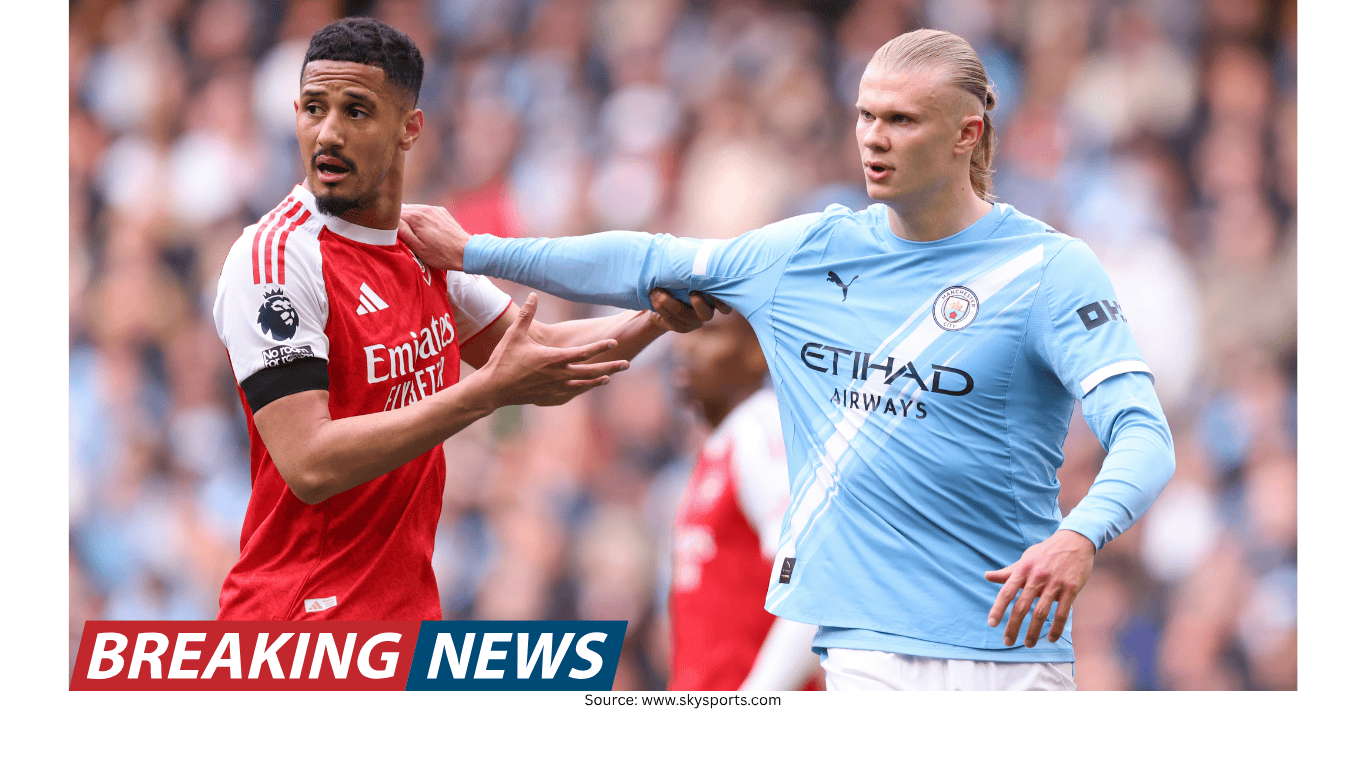
City go top, but the questions remain
Manchester City have moved above Arsenal to the top of the Premier League table, yet the manner of their 1-0 win at Burnley ensured the title conversation did not settle into certainty. City collected the three points they needed, but the performance at Turf Moor was not the type of statement many expected after their high-profile victory over Arsenal at the Etihad Stadium just days earlier.
The result leaves City and Arsenal level on points and goal difference, with City ahead only on goals scored. That fine margin matters because it illustrates how little separates the two sides at the summit. City have scored three more goals than Arsenal this season, which is currently enough to put them first, but the advantage is slim and could shift quickly.
With five league games remaining for City, the race is entering its decisive stretch. But the Burnley match, rather than projecting inevitability, offered a reminder that even the best teams can look vulnerable when the second goal does not arrive.
Fast start: Haaland strikes early
City began as they would have wanted. Erling Haaland scored after five minutes, clipping in an excellent opener that appeared to set the tone for a comfortable evening. Given expectations that City would overwhelm Burnley, the early goal seemed to confirm the script.
However, the match did not develop into the kind of dominant, multi-goal display some had predicted. City created opportunities and spent long periods in control, but they were unable to add to Haaland’s opener. As the game wore on, the absence of a second goal ensured tension remained, and Burnley were able to create moments that tested City’s composure.
By full-time, Pep Guardiola looked relieved to hear the final whistle. The reaction captured what the scoreline suggested: City had done the essential part—winning—but not in a way that eliminated doubt.
Neville: a City win that could still lift Arsenal
The narrow victory sparked a notable assessment from pundit Gary Neville, who argued that the performance itself may encourage Arsenal. In his view, City’s display was not convincing enough to suggest they will cruise through their final fixtures without dropping points.
Neville framed the outcome in a striking way, describing it as a win for City but also “the best win Arsenal could have hoped for.” The logic was straightforward: City took three points and went top, but they did not look untouchable. If City play at a similar level in the run-in, Neville believes they will not win all five of their remaining league games.
That perspective matters because the title race is being decided not only by results, but by momentum and belief. A team chasing can draw confidence from signs of vulnerability, even when the leader keeps winning. Burnley’s ability to create nervy moments late on, despite their relegation, offered precisely that kind of signal.
How the table looks: level on points, separated by goals
After the Burnley match, City lead Arsenal on goals scored, with the clubs otherwise level on points and goal difference. City’s three-goal advantage in the “goals for” column is currently the only separator.
That context makes every matchday significant, and it also means Arsenal’s schedule immediately becomes part of the story. Arsenal play twice before City’s next league game, giving them a chance to shift the pressure back onto the champions.
Neville pointed to Arsenal’s upcoming home match against Newcastle as an immediate opportunity for them to “reassert their three-point lead.” The wording underlines the swing nature of the situation: City’s win has moved them to the top, but Arsenal have games in hand and can respond quickly.
Haaland: “One-nil is amazing”
After scoring the matchwinner, Haaland was clear about what mattered most to him: the victory, not the margin. He appeared irritated by questions about goal difference, repeatedly returning to the theme that winning is the priority regardless of scoreline.
“We had a lot of chances but I’m happy we won. That’s the most important thing,” he said, adding that the team should not think about anything else beyond trying to win the next match. In his view, the fact City are top of the league should be enough to satisfy the focus on outcomes.
Haaland’s comments also reflected the mindset City often adopt in tight title races: collect points first, then worry about style. He highlighted the upcoming fixtures on the horizon—first Saturday, then Everton—while stressing that “one-nil is amazing” if it brings three points.
His reaction is understandable in a run-in where every match can bring a new twist. Yet it also illustrates the tension between the cold arithmetic of results and the broader question of performance level. When a team is winning but not fully convincing, rivals can interpret the same match in a very different way.
Guardiola: chances created, no frustration
Guardiola’s post-match assessment was notably upbeat. While he cut a frustrated figure during parts of the second half, he insisted afterwards that frustration was not the right lens through which to view the performance.
Asked whether he was disappointed there was not more from his side, Guardiola focused on chance creation. He said City created a lot, describing it as a “fantastic game” and emphasizing the demands of playing three days after an intense match. In his telling, the key issue was not a lack of control or intent, but simply that City “missed some goals.”
“No frustration,” he said. “Why should I be frustrated? We are right now top of the table. Frustration doesn’t exist.” He acknowledged that City can do better and score more, but praised the players for what they put into the match and stressed that nothing was taken for granted.
Was fatigue a factor? Guardiola rejects the idea
One of the obvious questions after a narrow win following a major match was whether City were feeling the effects of their exertions against Arsenal. Guardiola rejected that suggestion.
He argued that City actually produced a better performance in terms of chances than they did in the previous game, while also noting the quality of the opponent they faced on Sunday. For him, the performance level was “really, really good,” even if the scoreline remained tight.
At the same time, Guardiola acknowledged the reality of the schedule and the physical demands on his squad. With five Premier League games left, he described the situation plainly: “This is the reality.” He also referenced a tough semi-final on Saturday, framing the period ahead as a sequence of high-stakes matches.
Guardiola spoke about the possibility of changes, noting that players have logged a lot of minutes and that by the end of the Burnley match the team were “a little bit tired.” The message was not that fatigue explained the performance, but that squad management may become increasingly important as the fixtures keep coming.
Why this 1-0 matters beyond the points
In isolation, a 1-0 away win is a strong result, and City’s early goal plus the ability to see the match out are qualities associated with champions. But in a title race measured in fine margins, the details of how a game unfolds can influence perceptions and confidence across the league.
From City’s perspective, the positives are clear:
- They won and moved top of the table.
- They created chances and started strongly through Haaland’s early goal.
- They navigated a potentially awkward away match three days after a demanding fixture.
From Arsenal’s perspective, the same match can be read differently:
- City did not build on their early lead, leaving the door open deep into the game.
- Burnley produced moments that made City look less than comfortable.
- The performance provided encouragement that City may yet drop points if they repeat that level.
This is why Neville’s assessment resonated: it is possible for City to win and still give their closest rival reason to believe. In the final weeks, belief can be as valuable as any statistical edge.
What happens next: Arsenal’s chance to respond
The immediate schedule gives Arsenal an opening. With two league matches to play before City next appear in the Premier League, Arsenal can apply pressure by taking maximum points and shifting the table again.
Neville highlighted Arsenal’s home game against Newcastle as a moment to “reassert” their position. Whether Arsenal can do that will shape the narrative quickly, because the leadership at the top is currently determined by the narrowest of separations.
For City, the focus is on maintaining their winning run. Guardiola has spoken of the challenge of the remaining games and the need to manage minutes, while Haaland has made it clear that he views the scoreline as secondary to collecting wins.
A title race still defined by uncertainty
City’s win at Burnley achieved the immediate objective: three points and a move to the top. Yet it also reinforced that this Premier League title race is far from resolved. With City and Arsenal level on points and goal difference, and separated only by goals scored, every match carries the potential to swing the balance.
The Burnley game offered two competing interpretations. Guardiola saw a performance full of chances and effort, with no reason for frustration. Neville saw a display that suggested City could yet drop points if they do not improve. Haaland, meanwhile, embodied the striker’s pragmatism: win first, worry about the rest later.
As the final five games approach, those perspectives will continue to collide. City are top, but not clear. Arsenal are behind, but not beaten. And with the margins so tight, even an “underwhelming” win can become a significant moment in how the run-in is understood.