
Enzo Fernandez sets the tone as Chelsea respond at Wembley to reach the FA Cup final
A week that underlined football’s speed of change
Five days can feel like a lifetime in football, and Chelsea’s latest swing from despair to renewed belief offered a clear example. After being embarrassed at Brighton in a limp display that became the final act for Liam Rosenior, Chelsea returned to Wembley with a place in the FA Cup final on the line. This time, they found a way through, beating Leeds and keeping their season alive.
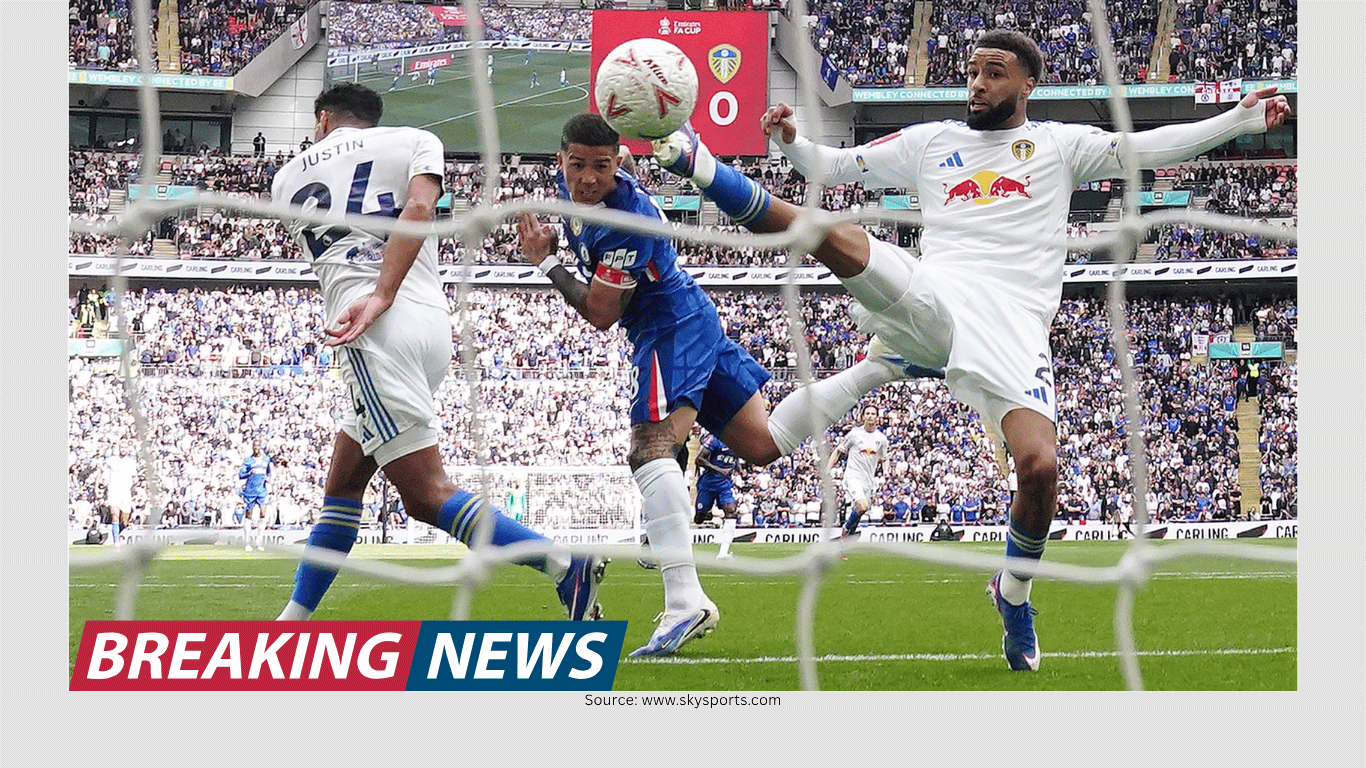
The decisive moment came from Enzo Fernandez, whose header proved enough to set up a final against Manchester City on May 16. It was not only a winning goal; it became a symbol of a changed attitude. Where Chelsea had looked passive and overrun on the south coast, they were dogged and defensively disciplined at Wembley, showing spirit and determination at a moment when their season threatened to drift away.
From the Amex low point to a Wembley response
The contrast between the two performances could hardly have been sharper. At Brighton, Chelsea were second best across the pitch. The game passed Fernandez by as Brighton ran all over Chelsea, and the defeat left a clear sense of a team in trouble. Rosenior called that performance “unacceptable” and said it was one he “didn’t want to see again.”
In the immediate aftermath at the Amex, Fernandez cut a striking figure. Minutes after the final whistle, he stood in front of the away end, staring into the abyss. He was the last off the pitch, even after Brighton’s triumphant players. At the time, it looked like a power-play, a message that something had to change.
Five days later, the change was visible. At Wembley, Fernandez did not simply play better; he grabbed the situation and the game by the scruff of the neck. Chelsea, so flat at Brighton, left everything out there in a performance that felt like an answer to the criticism that had built up during their poor run.
Fernandez leads by example in a “chalk and cheese” turnaround
Fernandez’s Wembley display was described as barnstorming, and it carried weight because of what had happened earlier in the week. He scored the winning goal and set the tone in midfield, driving Chelsea through a match that demanded resilience rather than flair. The performance was “chalk and cheese” compared with Tuesday night.
It was also a reminder of how quickly a narrative can shift for an individual player. Fernandez had been part of the problem at Brighton, as Chelsea struggled to match Brighton’s energy and control. At Wembley, he became the player who imposed himself, and his contribution went beyond the header. His work in midfield, his leadership, and his ability to handle the pressure of a semi-final all stood out.
One detail captured the scale of Chelsea’s improvement. At Brighton, they “didn’t make a tackle for the first 30 minutes.” At Wembley, the approach was different: Chelsea were committed, organised, and ready to fight for second balls. It was the kind of performance that suggested a group still capable of responding when pushed to the edge.
Interim management and a clear focus on Leeds
Calum McFarlane, the interim coach tasked with stepping into the crisis, became an important part of the story. With Chelsea needing stability and direction, he had to manage both the immediate challenge of Leeds and the emotional hangover from Brighton.
When asked about the biggest difference between Wembley and the 3-0 defeat on the south coast, McFarlane sidestepped the comparison in the manner of a seasoned manager. “We haven’t even looked at the Brighton performance, we’ve been focused on Leeds,” he said.
That response, whether strictly literal or a message to protect the squad, spoke to a clear strategy: move on quickly, narrow the focus, and give players a clean slate. Chelsea’s performance suggested that approach helped. Instead of looking weighed down by what had happened at the Amex, they played with a sharper sense of purpose.
A familiar Fernandez moment: the back-post run
McFarlane was more than happy to praise Fernandez after the match, highlighting a specific attribute that has become a theme in his season: arriving at the back post when Chelsea attack down the right. The goal against Leeds, a header, fitted that pattern.
McFarlane even joked with the midfielder afterwards. “I said to him, ‘you like scoring at the back post for me’ and he just laughed,” he said, referencing Fernandez’s previous key moment under his interim watch: a 94th-minute equaliser at Manchester City in January, in McFarlane’s first game as interim boss.
The coach’s explanation of the technique was detailed and revealing. Fernandez, he said, “does that really well,” pointing to his timing of runs, his ability to generate distance and height on his jump, and his heading technique. It was a reminder that goals like these are not accidental; they are the product of movement, anticipation, and a player willing to commit himself into the box at the right time.
“A winner”: why Fernandez matters to this Chelsea group
McFarlane’s praise went beyond the goal. He described Fernandez as “a winner” and “massive for this group,” emphasising both his talent and his mentality. The coach also pointed to the midfielder’s versatility: “the best thing about Enzo is that he can do a bit of everything.”
In a match that demanded grit, McFarlane highlighted the qualities that become visible “when it gets tough.” He spoke about seeing “the fight in him,” seeing him “driving the group on,” making tackles, and fighting for every loose ball. Fernandez, he said, was “exceptional” and deserved the man of the match award.
For Chelsea, those traits were particularly valuable given the context. This was not a team arriving at Wembley on the back of momentum. It was a team trying to halt a slide, rebuild confidence, and prove that the season still had something meaningful left in it.
Breaking a damaging run: scoring again and changing the mood
The semi-final win also carried significance because of Chelsea’s recent struggles in front of goal. They had failed to score during a five-game losing streak in the Premier League, a run that contributed to Rosenior’s departure. Against Leeds, it took just 23 minutes for Chelsea to find the net.
McFarlane framed that early breakthrough as more than a tactical detail. “I think it was important to break the momentum and the form that we were in,” he said. In his view, the result “completely changes the feel within the group,” and that shift could be “more important” than anything else, because it provides confidence going into the next five games.
In other words, the win was not only about booking a final; it was about restoring a sense of capability. For a squad that had been stuck in a negative cycle, a cup semi-final victory offered a different emotional reference point: proof that the team could still deliver under pressure.
What Chelsea showed at Wembley
Chelsea’s performance against Leeds was defined by commitment and control of key moments rather than a free-flowing display. The description of the showing as “dogged and defensively-disciplined” captured the essence of it. They were organised, prepared to compete, and willing to do the less glamorous work that had been missing at Brighton.
Fernandez’s role in setting the tone mattered because it illustrated leadership through action. In midfield, he helped Chelsea avoid being overrun, and his decisive contribution in the box provided the difference between the teams. For a club trying to stabilise itself, having a player capable of lifting the collective level in a high-stakes match is crucial.
The match also suggested that Chelsea’s players responded to the change in the dugout, at least in the short term. McFarlane’s insistence on focusing solely on Leeds may have helped simplify the task: one opponent, one match, one clear objective. The result was a performance that looked more like a team than the one that had unravelled at the Amex.
Next: a final against Manchester City on May 16
By winning at Wembley, Chelsea earned the chance to face Manchester City in the FA Cup final on May 16. For McFarlane, it also creates a striking opportunity: the possibility of beating Pep Guardiola in a major final.
McFarlane did not present the run-in as a dramatic mission, but he did stress the importance of standards and momentum. “It’s unfortunately not worked out like that this year, but we want to win every single game from now to the end of the season, as you do in any season,” he said. “But it’s not extra motivation. We want to do it for ourselves, we want to do it for the fans and the club, everyone.”
Those words reflected a desire to reframe the remaining weeks as an opportunity rather than an obligation. The final will provide the biggest stage of all, but the immediate challenge is to carry Wembley’s spirit into the matches that come before it.
Key takeaways from Chelsea’s semi-final win
A rapid turnaround: Chelsea moved from a damaging defeat at Brighton to a resilient Wembley victory in the space of five days.
Fernandez as the difference: After struggling at the Amex, he produced a commanding midfield display and scored the winning header against Leeds.
A clearer identity on the day: Chelsea were described as dogged and defensively disciplined, a major shift from the passive display in midweek.
McFarlane’s impact: The interim coach kept the focus on Leeds, praised Fernandez’s all-round qualities, and spoke about changing the mood within the squad.
A season still alive: The win sets up an FA Cup final against Manchester City on May 16 and offers Chelsea a chance to salvage the campaign.
A performance that reset the conversation
Chelsea’s season has not followed a smooth path, and the events of the past week underlined that instability. Yet Wembley offered a reminder that football can turn quickly when a team finds urgency and a player steps forward at the right moment.
Fernandez’s journey from the image at the Amex—standing alone after a limp defeat—to leading Chelsea into an FA Cup final captured that shift in a single week. It did not erase what happened at Brighton, but it did provide a response: a performance built on fight, discipline, and the kind of decisive contribution that cup football often demands.
With Manchester City waiting on May 16, Chelsea now have a clear target. The challenge will be to ensure that Wembley was not a one-off, but the start of a more consistent standard in the weeks that remain.