
Gary Neville: Arsenal can still finish ahead of Manchester City, but the run-in will be tense
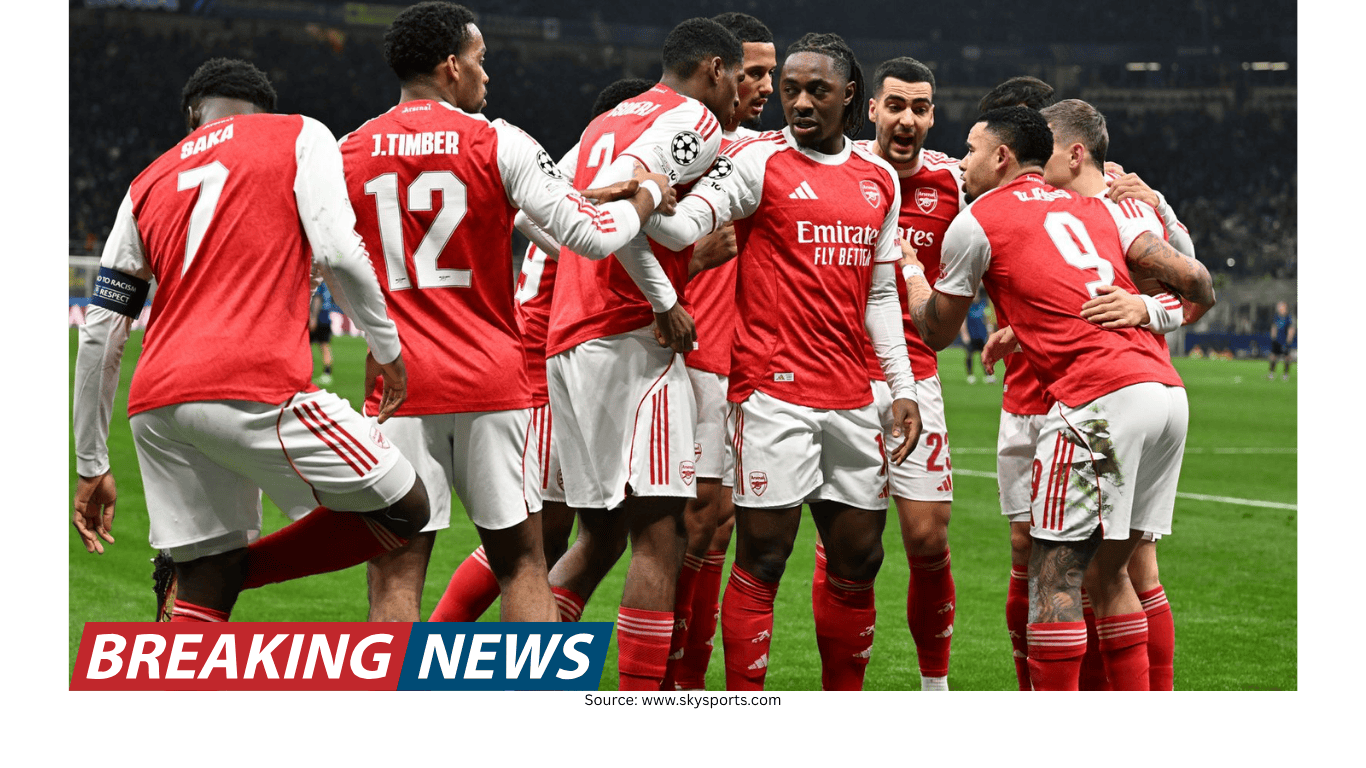
Neville backs Arsenal, but warns of a difficult final stretch
Gary Neville believes Arsenal can still win the Premier League title ahead of Manchester City, but he has offered a clear warning about what lies ahead. In his view, the final weeks of the season will not be comfortable for anyone connected to the club, describing the run-in as “10 more weeks of pain” for supporters as the pressure builds and the margin for error shrinks.
Arsenal’s position at the top of the table remains strong, but Neville’s point is not about a lack of quality. Instead, it is about the emotional and physical strain of a title race that is likely to stay alive deep into the calendar, especially with City close behind and still capable of applying relentless pressure.
Arsenal restore their lead after a key win
Arsenal restored a five-point lead at the top of the Premier League with a 2-1 win over Chelsea. The result came after Manchester City had edged Leeds 24 hours earlier, a sequence that underlined how quickly the mood can swing during the closing stages of a season.
The table picture is complicated by the fact City have a game in hand. That extra fixture could reduce Arsenal’s advantage to two points, tightening the race and increasing the sense that every match will feel decisive. Neville’s assessment reflects that reality: even when you are leading, you can still feel chased.
Resilience after setbacks becomes part of the title story
Neville praised Arsenal’s response to a difficult moment earlier in the campaign, pointing to their reaction after a two-goal collapse at Wolves. Since then, Arsenal have successfully navigated back-to-back London derbies, keeping City at arm’s length and showing the kind of recovery that often defines champions.
In Neville’s view, that resilience is not accidental. He argued Arsenal have “quality, physical strength and experience of the last three years of losing it,” suggesting that previous disappointments can become a resource rather than a burden if the team uses those memories in the right way.
He framed the final phase of the season as something supporters must endure as much as enjoy. The tension is unavoidable, he implied, but it is also part of what makes a title race meaningful.
Ending a long wait adds extra weight
Neville also referenced the significance of Arsenal’s long wait for a league title, noting how the discussion often returns to the club’s last triumph and the years that have followed. That history can become a psychological factor, particularly when matches become tight and the stakes feel heavier with every passing week.
For Arsenal, the challenge is to prevent that narrative from taking over. Neville’s message was that the team must “try to get rid of that” and focus on the work required in front of them. The pressure, he suggested, is not just created by the league table but by the memories and expectations that surround a club of Arsenal’s stature.
The Guardiola factor and the question of calm under pressure
One of Neville’s central concerns is the opponent. He described City as “Pep Guardiola’s machine,” a side with a track record of winning titles and handling the decisive moments of a season. That experience can matter when the final games become a test of composure as much as talent.
Neville also raised a specific question about leadership and emotional control inside Arsenal’s dressing room. He pointed out that while Gabriel Jesus has won the Premier League, he does not see him as the type to carry the entire group over the line alone. The broader issue, as Neville framed it, is whether Arsenal have a player—or multiple players—who can settle the group, slow the game down when needed, and keep everyone composed when the pressure rises.
He compared that requirement to teams he played in, where experienced winners were present in numbers. Even so, Neville ultimately said he thinks Arsenal will “get there,” despite acknowledging how hard the final stretch can be.
Four fronts and the strain of a crowded calendar
While the title race is the headline, Neville highlighted what he believes could become Arsenal’s biggest practical problem: the number of games. Arsenal are still fighting on multiple fronts and, as outlined, could face a potential 21 matches in 87 days if they reach the final of both the FA Cup and the Champions League.
That kind of schedule forces difficult decisions. It also increases the risk of injuries and fatigue, two factors that can reshape a season quickly. Neville’s view was that the balancing act will be one of Mikel Arteta’s biggest challenges as he tries to end the club’s long wait for a league title while also competing in cup competitions that demand strong line-ups.
Squad depth has improved, but rotation remains a test
Arsenal have strengthened their squad depth this season with signings such as Piero Hincapie, Martin Zubimendi and Viktor Gyokeres. Even with those additions, Neville believes the manager still faces a complex rotation puzzle as the decisive period arrives.
His argument was not that Arsenal lack quality options, but that certain competitions do not allow for compromise. As he put it, “You can’t throw away a Champions League, you can’t throw away a Carabao Cup final,” meaning Arteta must find a way to manage minutes without undermining Arsenal’s chances in the biggest matches.
How Neville sees the cups fitting into Arsenal’s priorities
Neville outlined a hierarchy of selection decisions that many managers face late in the season. In his view, the Carabao Cup final is a one-off match that demands the strongest available team. The Champions League, by its nature, also requires a full-strength approach. The Premier League, with the title at stake, is obviously non-negotiable too.
That leaves the FA Cup as the competition where a “calculated risk” might be possible. Neville was careful not to dismiss it, but he argued that Arsenal may need to trust their second XI deep into the tournament, potentially up to the semi-final stage, to protect the squad’s freshness for the other fronts.
He added that the FA Cup could be the competition that “falls by the wayside,” depending on how the schedule and injuries develop. He also referenced Arsenal’s fifth-round tie against Mansfield, suggesting they would likely progress, while noting that the difficulty would increase as the rounds advance.
Arteta on the fine margins: ‘My heart almost stopped’
After the win, Arteta offered his own perspective on the stress of tight matches during the run-in. He said his “heart almost stopped” during the nerve-jangling finale, highlighting a late moment involving goalkeeper David Raya, who pushed a cross around the post.
Arteta’s comments captured the reality Neville was describing: even when a team is in control of its season, individual moments can feel enormous. Managers and players can plan patterns of play and manage game states, but a single action can still swing the outcome.
Arteta also acknowledged that Arsenal were not getting the dominance and sequences of play they wanted, even against 10 men. His conclusion was that navigating those uncomfortable spells is “a big part of the game,” particularly when “the margins are so small.”
Set-pieces continue to play a major role
One of the most notable tactical themes in Arsenal’s season has been their productivity from corners. Jurrien Timber’s 66th-minute winner marked Arsenal’s 16th goal from a corner this season, equalling a Premier League record shared by Oldham and West Brom for a single campaign, with nine games still to play.
That statistic is more than a trivia point. In matches where open play becomes tense and opponents defend deeper, set-pieces can provide a reliable route to goals. Arsenal’s ability to score from corners has helped them turn pressure into points and could remain a critical weapon as the season reaches its most demanding stage.
Half-time reminders and the importance of patience
Arteta also spoke about the mindset required during difficult matches, referencing a recent example from the north London derby. Arsenal were drawing at half-time in that game before going on to win 4-1, and Arteta said he reminded his players they had been in the same position seven days earlier.
According to Arteta, the message was simple: difficult patches are part of earning the right to win. The players’ response, he suggested, was to accept the challenge rather than panic, trusting that the second half could still bring the outcome they wanted.
This theme aligns with Neville’s wider argument about the emotional experience of the run-in. It is not only about playing well; it is about staying steady when the game does not follow the script.
What the final nine league games could demand
Neville’s prediction that Arsenal will edge City comes with an implicit condition: Arsenal must continue to handle pressure, rotation, and the inevitable moments of anxiety. With nine league games remaining, every weekend can change the landscape, especially with City’s game in hand still looming over the table.
Arsenal’s recent results have shown an ability to recover from setbacks and win tight matches, including in derbies where emotion and intensity can complicate performance. At the same time, the potential for a packed schedule across competitions means Arteta’s decisions will be scrutinised, particularly if fatigue or injuries begin to influence results.
Key themes Neville highlighted
Arsenal have the quality and resilience to win the title, but the experience will be stressful for supporters.
Manchester City’s experience under Guardiola keeps the pressure constant, especially with a game in hand.
The biggest risk may come from the volume of fixtures if Arsenal continue progressing in cup competitions.
Arteta’s rotation strategy—particularly in the FA Cup—could shape Arsenal’s ability to compete strongly across all fronts.
Fine margins, including late saves and set-piece goals, are likely to decide critical matches.
A title race shaped by nerves, depth, and small moments
Arsenal’s position gives them a real platform, and Neville’s backing reflects what the team has shown across the season: resilience after setbacks, the ability to win high-pressure games, and a growing capacity to manage difficult periods within matches.
But his warning about “10 weeks of pain” speaks to the nature of the challenge rather than any weakness unique to Arsenal. A title run-in is rarely comfortable, particularly when pursued by a side with City’s pedigree. If Arsenal are to turn their advantage into a trophy, they will likely need to keep finding solutions—through squad management, calm leadership, and the kind of decisive moments that have already defined their campaign.