
PSG edge Bayern 5-4 in nine-goal semi-final first leg as Dembele and Kvaratskhelia star in Paris
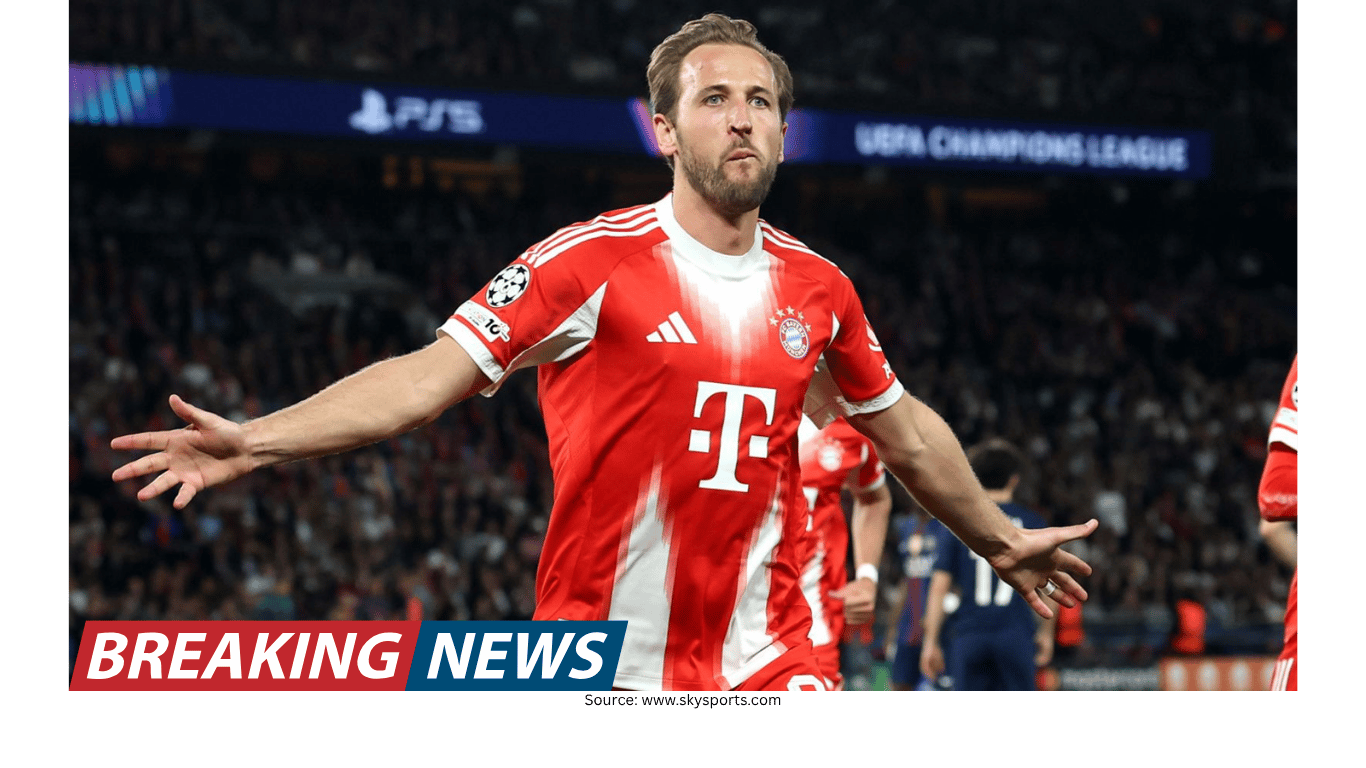
PSG take slender advantage after extraordinary 5-4 first leg
Paris Saint-Germain will travel to Germany with a one-goal lead after defeating Bayern Munich 5-4 in a Champions League semi-final first leg that swung repeatedly between control and chaos. The holders produced a spell of attacking football that briefly put the contest beyond reach, only for Bayern to respond with a late rally that keeps the tie finely balanced ahead of next Wednesday’s second leg.
The match was notable not only for its volume of goals but also for the historical markers it set. It was the first time in a European semi-final that both teams scored four or more goals. It also matched the joint-highest scoring semi-final in European Cup history, equalling Rangers’ 6-3 loss to Eintracht Frankfurt in 1960.
For all the drama, the headline numbers were stark: nine goals, PSG ahead by one, and Bayern still very much alive. Even the goalkeeping statistics were startling, with Bayern goalkeeper Manuel Neuer failing to make a save on a night when almost every clear chance seemed to end in a finish.
A first half of constant momentum shifts
The contest began in the way a heavyweight European semi-final often does: intense, direct, and played at a tempo that suggested neither side intended to manage risk. Bayern struck first through Harry Kane, who converted a 17th-minute penalty to register his 59th goal for club and country this season.
PSG’s response was swift and emphatic. Khvicha Kvaratskhelia levelled with a superb finish, setting the tone for a performance in which he repeatedly found space to hurt Bayern. The home side then moved in front when Joao Neves headed in the 33rd minute, a goal that appeared to reward PSG’s willingness to attack with numbers.
Bayern, however, refused to be pulled into a chase. Michael Olise smashed in an equaliser in the 41st minute, restoring parity and ensuring the final minutes of the half were played with the same urgency as the opening exchanges.
Then came a pivotal moment in stoppage time. PSG were awarded a penalty after a VAR review at the pitchside monitor for an Alphonso Davies handball. The decision was controversial because Ousmane Dembele’s cross struck Davies’ leg before making contact with his arm, but the penalty stood. Dembele converted in the fifth minute of added time, giving PSG a 3-2 lead at the break after a remarkable five-goal first half.
PSG surge to 5-2 with a devastating burst
If the first half was defined by momentum swings, the early stages of the second were dominated by PSG. Luis Enrique’s side emerged with renewed sharpness and, for a period, played as if determined to settle the tie in Paris.
Kvaratskhelia struck again, sweeping home to extend PSG’s lead, and the home side followed up almost immediately. Dembele then added his second with a lovely finish in off the post, completing a rapid double that arrived in the space of 143 seconds. By the 58th minute, PSG were 5-2 ahead, and the stadium had the feel of a contest that had been decided.
In that stretch, PSG’s attacking quality was unmistakable. Dembele and Kvaratskhelia were central to everything: carrying the ball, driving at defenders, and finishing with composure. Their two goals each meant PSG had four goals from the pair alone, a decisive contribution in a match where small margins were constantly exposed.
Bayern’s late response keeps the tie alive
Yet the match did not settle. Bayern found a route back through set-piece and technique, scoring twice in three minutes to turn a seemingly hopeless situation into a one-goal deficit.
Dayot Upamecano headed in the 65th minute to begin the fightback, and three minutes later Luis Diaz produced a moment of quality. The forward wonderfully brought down Kane’s lobbed pass before firing past PSG goalkeeper Matvey Safonov. Diaz’s goal was initially ruled out for offside, but a VAR check overturned the decision, giving Bayern renewed belief and ensuring the closing stages were played with the tension of a tie that had been reset.
PSG held on to win 5-4, but Bayern’s late surge changed the mood around the tie. A three-goal lead had evaporated into a narrow advantage, leaving PSG with work to do in the return match and Bayern with clear evidence that they can create chances against the holders.
Dembele: PSG will not change their philosophy
Dembele, named man of the match, suggested the second leg could follow a similar pattern, pointing to the attacking instincts of both teams. He described the first leg as a contest between “two great teams who attack, who don’t hesitate,” and acknowledged PSG’s drop-off after building a 5-2 lead.
“We’re happy with the result, even though at 5-2 we stopped playing a bit towards the end,” he said. “We’re not going to change our philosophy. We’re going to attack, and they’re going to attack too. So I think it’s going to be a great second match.”
With that approach, PSG appear committed to taking their strengths into the Allianz Arena rather than protecting a slim cushion. Bayern, meanwhile, have already shown that even when behind by multiple goals, they can still find a way to make the tie uncomfortable.
A tie that could threaten a Champions League scoring record
The scale of the first-leg scoreline has also created a statistical possibility for the second match. If five goals are scored at the Allianz Arena, the semi-final will become the highest-scoring Champions League knockout tie in history. That is a reflection of how open the first leg was, and how quickly both teams turned possession into clear chances.
What happens next week will determine whether the first leg was an outlier or a sign that this pairing is uniquely suited to producing a goal-laden contest. With PSG intent on attacking and Bayern encouraged by their late resurgence, the ingredients for another high-scoring night are already in place.
Debate over defending as nine goals raise questions
Nine goals in a semi-final inevitably triggers debate about defensive standards. Kane offered a surprising assessment, praising the defending despite the scoreline. He argued that the quality of attacking players can overwhelm even elite defenders, and pointed to the demands placed on centre-halves who are asked to cover multiple areas of the pitch.
“Even though there was nine goals scored, there was some amazing defending out there,” Kane said. “You’ve got the best players in the world. The best attackers, the best defenders. Of course, sometimes the attackers are going to come out on top and show their quality.”
He also added: “When you go back and look at the centre-halves playing in midfield, in attack sometimes, out wide against the wingers, credit to them. It’s a really hard job. I thought they were outstanding.”
Wayne Rooney took the opposite view, questioning how defenders could be praised after conceding so many times. He suggested Kane’s comments may have been shaped by loyalty to team-mates and a desire to lift confidence ahead of the second leg.
“I love Harry Kane. Everyone can see that on the words I say about him. But, there’s no way he can be praising his defenders,” Rooney said. “Maybe because they are his team-mates. He’s trying to give them a bit of confidence for next week. The defending from both teams was really bad.”
Jamie Carragher offered a more nuanced interpretation. While acknowledging that a game like this often prompts criticism of defending, he argued the attacking performances were so strong that they shaped the match more than obvious defensive errors.
“Normally when I see a game like that I’ll say ‘the defending is not good enough’ or ‘it is not up to the standard of this level of football’,” Carragher said. “But what I would say is: Every attacking player on the pitch was an eight or nine out of 10. Every attacking player got the better of their counterpart.”
He added that, in his view, the goals did not feel like a collection of goalkeeping mistakes or moments of reckless defending. “When I remember the goals, it wasn’t like there was a goalkeeper howler or something stupid defensively, it felt like the goals were just great goals,” he said.
Carragher also framed the match as an example of two teams willing to take risks at the highest level, contrasting it with broader complaints about cautious football. “We’ve been talking a lot about teams who don’t take enough risks. We talk about teams not losing the game rather than winning it,” he said. “Tonight we had plenty of risk.”
Key moments that shaped the first leg
- 17’: Harry Kane opens the scoring with a penalty, his 59th goal for club and country this season.
- PSG response: Khvicha Kvaratskhelia levels quickly before Joao Neves heads PSG in front in the 33rd minute.
- 41’: Michael Olise smashes in Bayern’s equaliser to make it 2-2.
- Stoppage time: Ousmane Dembele converts a VAR-awarded penalty for an Alphonso Davies handball to put PSG 3-2 up at half-time.
- Second-half burst: Kvaratskhelia and Dembele score within 143 seconds, taking PSG to 5-2 by the 58th minute.
- Bayern fightback: Dayot Upamecano heads in (65’) and Luis Diaz scores after a VAR overturn (68’) to reduce the deficit to 5-4.
What the scoreline means heading into Munich
The first leg delivered spectacle, but it also delivered a complicated set of lessons for both teams. PSG showed they can overwhelm Bayern with pace and finishing, particularly when Dembele and Kvaratskhelia are able to isolate defenders and attack space. At the same time, the final 25 minutes served as a warning about game management after establishing a commanding lead.
For Bayern, the match offered both frustration and encouragement. Conceding five is a heavy price in any semi-final, yet scoring four away from home, and doing so in a way that cut PSG’s advantage to a single goal, means the return leg will begin with genuine belief.
With the teams set to meet again next Wednesday in Germany, the semi-final remains open. PSG have the advantage, Bayern have momentum from their comeback, and the first leg has already set a standard for drama that will be difficult to ignore when the whistle blows for the second match.