
Manchester United’s top-four push gathers pace after Everton win, as pundits back Champions League return
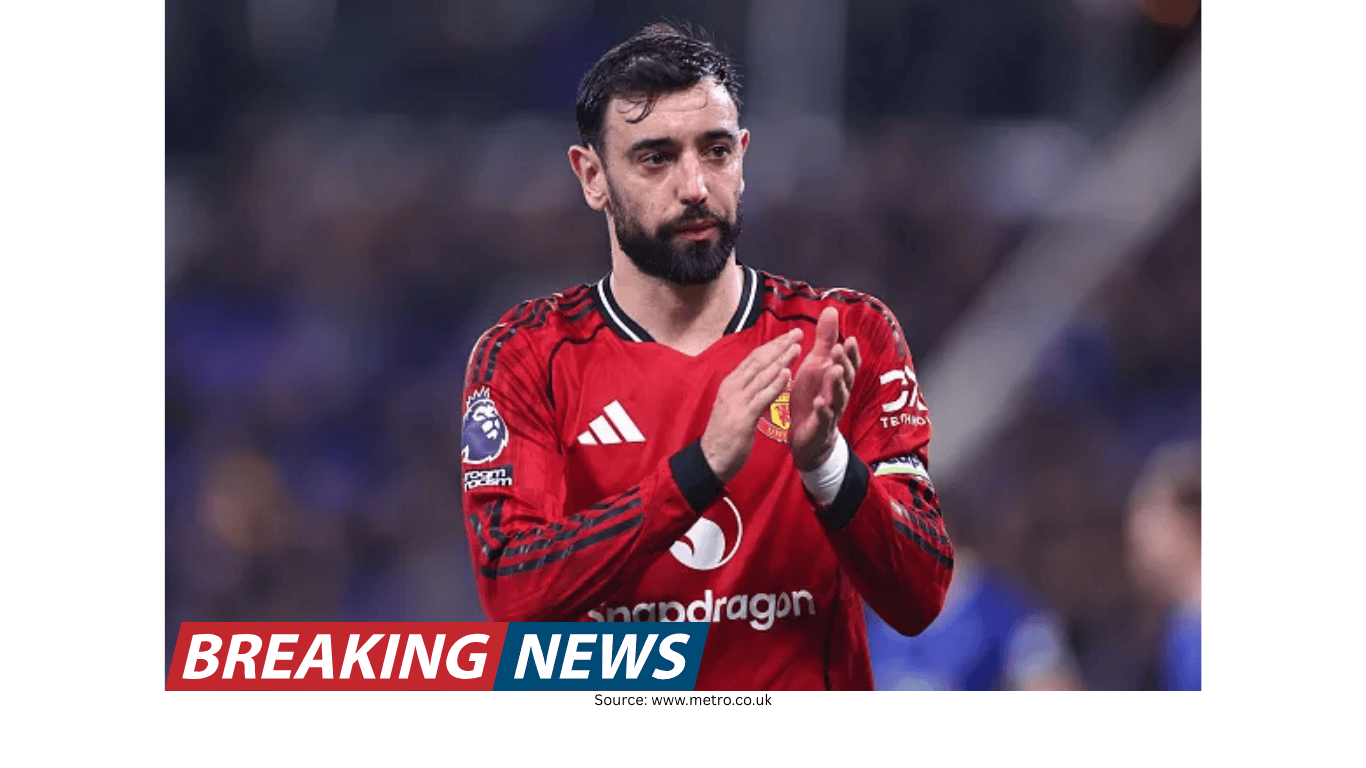
United edge Everton and return to fourth
Manchester United’s 1-0 win away at Everton has reignited debate about how high they can finish in the Premier League table. The result lifted United back into fourth place and extended an unbeaten run under Michael Carrick to six matches, a sequence that has tightened the race around the Champions League qualification positions.
The decisive moment came from Benjamin Sesko, whose third goal as a substitute in four games proved enough to secure the points. It was the kind of narrow victory that can shape a season, particularly at a stage when rivals are dropping points and the table can change quickly from one weekend to the next.
United’s move into fourth also came with a cushion: they now hold a three-point advantage over fifth-placed Chelsea, who failed to win at home against Burnley. With the margins so fine, that gap matters, even if it can disappear just as quickly.
Jamie Carragher: Champions League qualification is “virtually a guarantee”
Following the win, Jamie Carragher offered a confident assessment of United’s prospects, describing Champions League qualification as “virtually a guarantee.” His argument was rooted not only in United’s recent results but also in the wider context of the run-in.
Carragher pointed to the pressures facing competing clubs, particularly those still involved in European knockout football and domestic cup competitions. In his view, the schedule can become a decisive factor, with Thursday-night European commitments and the demands of trying to progress in multiple tournaments increasing the risk of dropped points in the league.
He also suggested that Aston Villa’s recent tendency to drop points could open the door for United to climb further. With Villa in third only three points ahead, United’s position is no longer merely about defending a top-four spot; it is also about whether they can catch the team above them.
“Manchester United are virtually a guarantee,” Carragher said. He highlighted Villa’s European commitments and added that Liverpool and Chelsea, still active in the Champions League and FA Cup, would likely be pulled in different directions as the season progresses. From his perspective, United’s comparatively lighter schedule strengthens their hand.
Gary Neville: United could finish third
Gary Neville struck a similar tone, though he framed it as a shift from earlier uncertainty to a more tangible opportunity. In his view, United have moved from flirting with the top four to being well placed to take it, and perhaps even to finish higher.
Neville described a previous spell in which United repeatedly had chances to climb into the top four but did not take them. Now, he believes the situation has changed. He argued that as other teams begin European knockout matches, the added fixtures and travel can act as “distractions,” while United, without those commitments, can focus on the league.
He acknowledged that a clear schedule is not a guarantee of good performances, noting that United had not played particularly well at Everton despite having had a long break. Still, he suggested that the ability to win even when performances are not at their best is a hallmark of a team moving in the right direction.
According to Neville, United are “starting to get over the line in games where they wouldn’t have done before.” He also referenced a point picked up at West Ham on a day when they did not play well, seeing that as another sign of a team accumulating results in different ways.
Most notably, Neville said he could see United finishing third. He described the season as “bizarre,” with multiple teams dropping points, and suggested that United have put together an “incredible points total” in recent weeks. While he stopped short of calling them clear favourites, he described them as being “in pole position” for a top-four finish.
The table picture: fourth place, a small gap, and third within reach
United’s league position places them at the centre of a tight contest. They are back in fourth, three points ahead of Chelsea in fifth, and three points behind Aston Villa in third. In practical terms, that means United have two battles running in parallel: protecting their current spot and chasing the team above.
The significance of the Everton win is not only the three points but also the way it changes the mood around the club. An unbeaten run of six matches under Carrick provides a platform, and the fact that Sesko has delivered decisive contributions as a substitute adds another storyline: United are finding goals and results from beyond the starting XI.
However, the same table dynamics that make a climb possible also mean there is little margin for error. With teams so closely packed, a single dropped result can quickly undo progress, especially if a rival puts together a short winning run.
Opta’s projection is more cautious than the pundits
Despite the bullish predictions from Carragher and Neville, statistical forecasting offers a more restrained outlook. United are currently predicted to finish fifth in the Premier League table, according to the Opta supercomputer.
Opta rates United as less likely than Aston Villa and Liverpool to finish in the top four. The model gives Villa a 95.9 per cent chance of securing Champions League football next season, with Liverpool next on 75.4 per cent. United are close behind Liverpool on 72 per cent.
Those percentages underline the difference between momentum-based narratives and probability-based forecasts. A run of results can transform the conversation quickly, but models typically weigh a broader range of factors and outcomes. In this case, Opta’s view suggests that while United are well placed, the top-four race remains open enough that fifth is still a realistic finishing position.
Why fifth place could still mean Champions League football
Even if United were to finish fifth, that position is described as “highly likely” to be enough for Champions League qualification next season due to the performance of English teams in European competitions this campaign.
The mechanism is UEFA’s coefficient table, which measures how clubs from each country perform across the three European competitions. At the end of the season, the top two nations in the coefficient standings are awarded extra Champions League places, referred to as European Performance Spots.
This matters for the Premier League race because it changes the stakes: finishing fifth could potentially be as valuable as finishing fourth, depending on how the coefficient picture settles. That possibility can reshape the pressure on clubs fighting around the Champions League line, though it does not remove the incentive to finish as high as possible.
England’s coefficient position: strong, but not yet mathematically confirmed
England’s position in the coefficient race is described as particularly strong. It is noted that England is the only nation with all of its teams still active in European competition. The English clubs mentioned as still involved include Nottingham Forest and Crystal Palace in the Europa League and Conference League respectively, along with Newcastle in the Champions League.
However, despite that breadth of involvement, England are not yet mathematically assured of finishing in the top two of the coefficient table. The campaign still has significant European football to be played, and it is noted that last season’s top-two finish was not confirmed until April.
That said, Opta’s expectation is emphatic: its expected points model gives England a 100 per cent chance of achieving a top-two finish. If that projection holds, the Premier League would be in line for an extra Champions League place, making fifth place a potential route into the competition.
Schedule and “distractions”: the argument behind United’s opportunity
A recurring theme in both Carragher’s and Neville’s assessments is the impact of scheduling. The idea is straightforward: clubs balancing league matches with European knockout ties and domestic cup ambitions face a heavier physical and mental load, and that can lead to points being dropped in the league.
Carragher referenced Thursday-night European football as a particular challenge, while also noting that clubs still competing in the Champions League and the FA Cup may be pulled toward prioritising those competitions as they reach later stages. Neville echoed the same point, using the word “distractions” to describe the competing demands on United’s rivals.
United, by contrast, are framed as having “no distractions,” giving them more time between matches to prepare and recover. Neville also cautioned that a lighter schedule is not automatically an advantage if performances do not improve, but he still believes United’s recent ability to grind out results can be decisive.
What the Everton win suggests about United’s current trend
United’s victory at Everton fits a pattern described by Neville: winning when playing well, winning when not playing well, and collecting points even on difficult days. In a tight race, those are often the results that accumulate into a meaningful league position by the end of the season.
Sesko’s match-winning contribution also points to the value of in-game options. Three goals off the bench in four games is a notable return, and it reinforces the idea that United are finding ways to decide matches even when the starting plan does not fully deliver.
At the same time, the broader picture remains unsettled. Pundit confidence sits alongside model-based caution, and the table remains close enough that a brief swing in form—either for United or their rivals—could change the outlook again.
The run-in: a race shaped by fine margins
With United now three points behind third and three points ahead of fifth, the closing months of the season are set up as a contest of consistency. The debate is no longer simply whether United can reach the Champions League places, but whether they can climb even higher while maintaining the resilience that has characterised their unbeaten run under Carrick.
Carragher’s “guarantee” and Neville’s belief in a possible third-place finish capture the momentum around United after the Everton win. Opta’s projection, meanwhile, serves as a reminder that probability still allows for multiple outcomes, including a finish just outside the traditional top four.
Yet the coefficient backdrop adds another layer: if England secure one of the top two coefficient spots, fifth place could still deliver Champions League football. For United, that means the pathway back to Europe’s elite competition may be wider than usual—but the immediate task remains the same: keep collecting results in a table where every point is amplified.