
Wolves stun Liverpool with stoppage-time winner in 2-1 Molineux victory
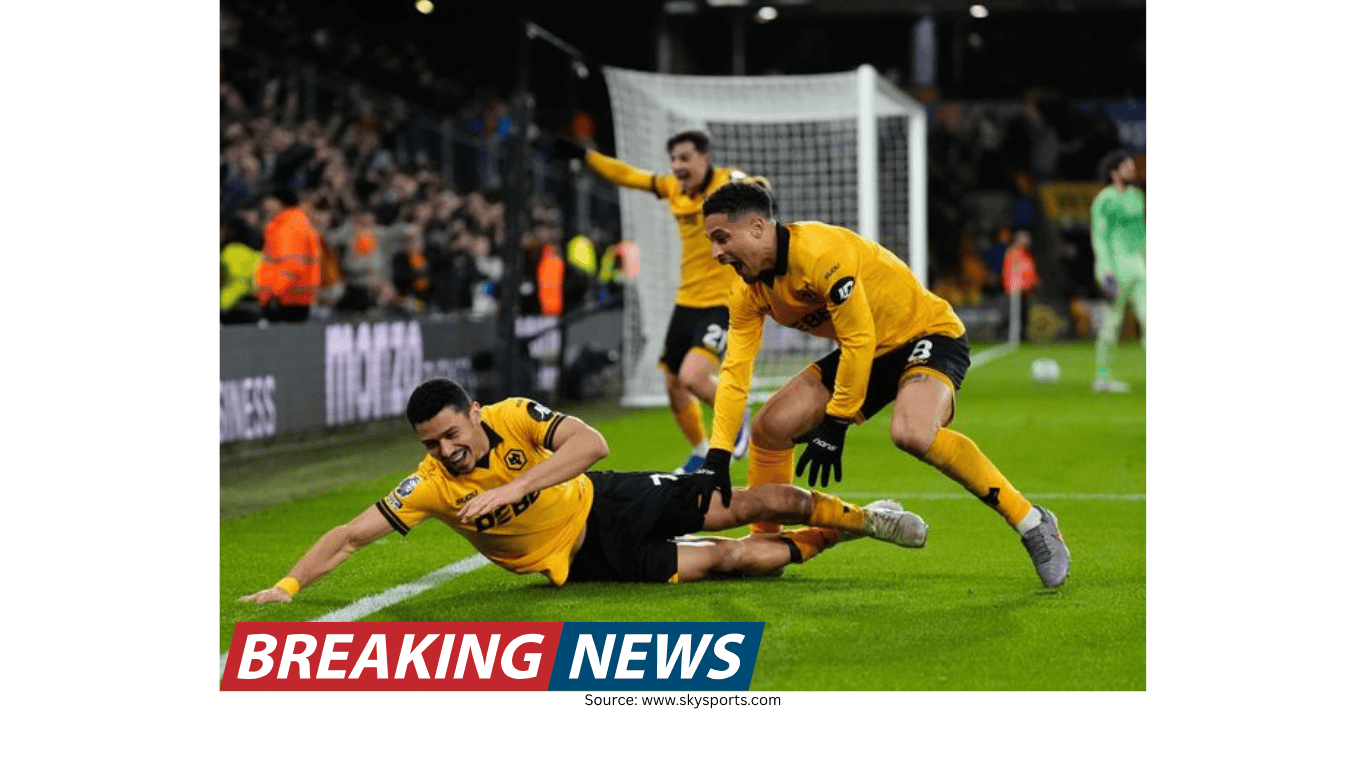
Andre’s late deflection seals Wolves win over Liverpool
Wolverhampton Wanderers produced a dramatic 2-1 win over Liverpool at Molineux, with Andre scoring a stoppage-time winner to lift the bottom club in a night that underlined both Wolves’ growing resilience and Liverpool’s recurring late-game problems.
Rodrigo Gomes had put Wolves ahead deep into the second half with a counter-attacking finish after coming off the bench. Liverpool responded quickly through Mohamed Salah, but Wolves had the final say when Andre’s speculative effort in the 94th minute deflected off Joe Gomez and beat Alisson.
The result leaves Liverpool fifth in the Premier League table, a missed opportunity in a game where a win could have moved them up to third. For Wolves, who had won only once all season prior to Friday, it marked a second victory in five days and a significant boost in a difficult campaign.
A slow start, then a chaotic finish
The contest was a study in contrasts: a subdued opening period followed by a frantic finale. Liverpool, despite their status as reigning champions, did not impose themselves early. Wolves, encouraged by their recent win over Aston Villa, were able to stay in the game and compete for territory and second balls.
Wolves’ first-half work was characterised by their ability to deal with pressure and disrupt Liverpool’s rhythm, with Joao Gomes repeatedly prominent as the home side defended set-pieces and battled in midfield. Liverpool had a series of corners but struggled to make them count, reflecting a broader lack of sharpness in the first half.
After the interval, Liverpool increased the intensity and began to create clearer openings. Substitute Curtis Jones came close from point-blank range, only for the opportunity to disappear when Cody Gakpo, on the goal line, inadvertently toed the ball away from him. It was the kind of moment that can define a match, and Wolves soon punished Liverpool on the break.
Rodrigo Gomes strikes after Wolves’ counter-attack
The breakthrough came when Wolves executed a counter-attacking move that exposed Liverpool’s defensive positioning. Tolu Arokodare outmuscled Virgil van Dijk in the build-up, and the Liverpool captain, though pushed, was unable to halt the forward’s progress.
Arokodare then fed Rodrigo Gomes, who lifted the ball over Alisson while under pressure from Ibrahima Konate. The finish gave Wolves a lead well into the second half and ignited a crowd that sensed the possibility of a major result.
The goal also rewarded Wolves’ approach: staying in the contest, working hard, and looking to exploit space when it appeared. In a game that had initially offered limited attacking flow, the counter-attack provided the decisive opening Wolves needed.
Salah responds, but Wolves find the final moment
Liverpool’s response was swift. Salah scored an equaliser that appeared to rescue his side from trouble and shift momentum back towards the visitors. However, the relief did not last.
Andre’s winner arrived in stoppage time. His shot, described as speculative, took a deflection off Joe Gomez and looped into the net in the 94th minute. While unfortunate for Gomez, the goal reflected a broader issue for Liverpool on the night: they lost control at a crucial stage and were punished in the most dramatic fashion.
For Andre, it was a match-defining contribution that earned him the player-of-the-match award. For Wolves, it was the kind of moment that can reinforce belief, especially for a team fighting at the bottom of the table.
Liverpool’s late concessions: a season-defining pattern
The defeat added to a troubling statistic for Liverpool. It was the fifth time this season that Arne Slot’s side have conceded a winning goal in the 90th minute or later—reported as the most ever by a team in a single Premier League campaign.
Those late slips have repeatedly undermined Liverpool’s results and, as the table tightens, could have serious consequences. With nine games to go, the margin for error is shrinking, and dropped points in matches where Liverpool have had significant possession and chances are becoming increasingly costly.
On this occasion, Liverpool had opportunities late on to take the lead themselves. Slot referenced moments where Salah was dribbling with options available before an interception, and a Virgil van Dijk header that came close. But Wolves’ winner came from a situation that Liverpool will view as avoidable—particularly given the deflection and the limited number of clear chances Wolves conceded.
Team selections and key changes
Wolves manager Rob Edwards made four changes to the side that beat Aston Villa. Ladislav Krejci, Matt Doherty, Angel Gomes and David Moller Wolfe came into the starting XI, as Wolves continued to manage a small squad while searching for the right balance of energy and structure.
Liverpool, meanwhile, made one change from the team that beat West Ham, with Jeremie Frimpong coming in at right-back. Joe Gomez dropped to the bench, later entering the match and becoming involved in the decisive deflection for Andre’s winner.
Both managers were forced to make in-game adjustments. Liverpool’s switch to bring on Curtis Jones helped them create more after the break, while Wolves’ use of substitutes—including Rodrigo Gomes and Tolu Arokodare—proved pivotal to the outcome.
Player ratings and standout performers
Andre was named player of the match after his influential performance and late winner. Wolves’ ratings reflected a collective defensive effort, with several players marked highly for their work across the pitch. Liverpool’s ratings, by contrast, suggested a performance that never fully reached the required level, particularly in midfield.
- Wolves (selected): Andre (8), Joao Gomes (8), Rodrigo Gomes (8), Sa (7), Doherty (7), S Bueno (7), Krejci (7)
- Liverpool (selected): Salah (6), Ekitike (6), Gakpo (6), Szoboszlai (6), Alisson (6), Van Dijk (6), Gravenberch (5), Mac Allister (5)
While individual marks offer only a snapshot, the overall picture was clear: Wolves’ key players delivered in decisive moments, while Liverpool’s performance levels dipped, especially during the slow first half and the loss of control late on.
Slot: “Same old story” as Liverpool struggle to convert open play
In his post-match press conference, Liverpool boss Arne Slot described the defeat as a familiar narrative. He pointed to his team’s difficulty in scoring from open play, even when they create chances and dominate possession.
Slot said Liverpool have recently picked up points through set-pieces, but that their issues in open play have persisted across “the last five, six, seven games”. He also criticised the quality of Liverpool’s set-piece delivery and execution in the first half, linking it to what he viewed as an overall poor opening period.
“We have far more ball possession than the other team,” Slot said, adding that Liverpool created more chances but still ended up conceding twice. He also highlighted the frustration of conceding from a situation he did not consider a clear chance, noting that similar moments have happened repeatedly this season.
Looking ahead, Slot acknowledged the setback but stressed there is still time to respond with nine games remaining. He said he expected more from his side than their current position and emphasised the need to improve performances rather than rely on deflections or fine margins.
Slot also credited Wolves for fighting throughout the match, suggesting that their work rate and commitment earned them a measure of fortune.
Edwards: Wolves learning the work required at this level
Wolves boss Rob Edwards focused on the collective effort and the gradual improvement he believes is taking shape. He said Wolves wanted to “be in the game” and felt they could improve by applying more pressure, forcing Liverpool to open up and leave spaces.
Asked about what has changed, Edwards framed it as a work-rate issue and suggested it can take time for players to fully appreciate the intensity required to win at Premier League level. He described a “stark difference” in Wolves’ recent efforts and emphasised the unity within a small squad.
While acknowledging Wolves are “not playing how I want to play”, Edwards said his team are showing characteristics and finding ways to compete, pushing back against the idea that Wolves are as poor as some may have assumed.
What comes next: FA Cup return under the lights
The two teams will meet again at Molineux in the FA Cup fifth round on Friday evening, setting up an immediate rematch after a league game that is likely to leave Liverpool determined to respond.
Edwards suggested Wolves may have made Liverpool “quite angry” with this result, but indicated his side will approach the cup tie with ambition. When asked whether supporters might prefer cup success given Wolves’ league situation, he rejected the idea that it must be one or the other, saying Wolves will try to win both.
Match summary
- Wolves beat Liverpool 2-1 at Molineux in the Premier League.
- Rodrigo Gomes scored after coming on as a substitute, finishing a counter-attack.
- Mohamed Salah equalised for Liverpool, but Wolves won it late.
- Andre scored a stoppage-time winner that deflected off Joe Gomez in the 94th minute.
- Liverpool remain fifth in the table; Wolves claimed a second win in five days.
For Wolves, the night offered proof that discipline, intensity and timely substitutions can shift the course of a season. For Liverpool, it was another painful entry in a campaign where possession and pressure have too often failed to translate into decisive control—especially when the clock is running down.